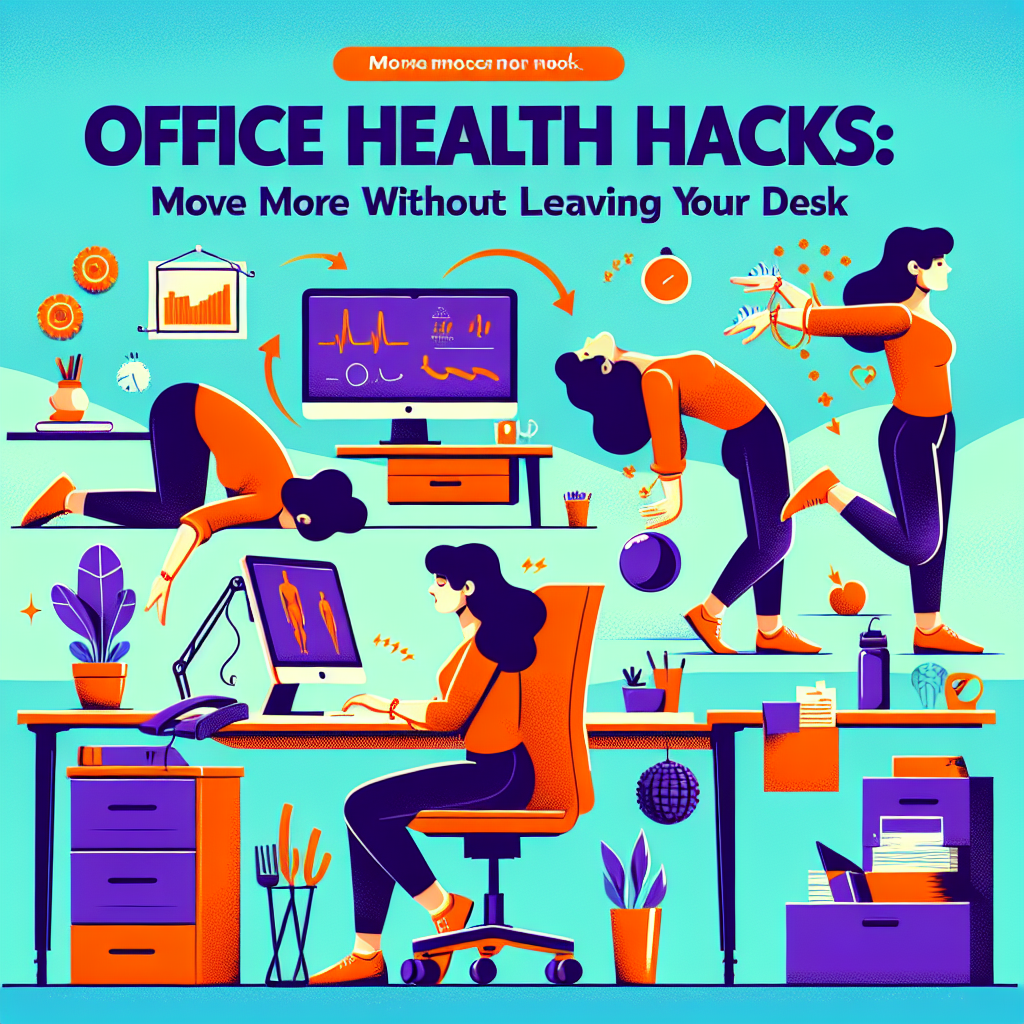
Small, consistent movements improve energy, cut stiffness, and protect long-term health—no gym or special clothes required.
Why micro-movements matter
Long sitting stiffens hips, rounds shoulders, and slows circulation. Frequent tiny movements (often called NEAT—non‑exercise activity thermogenesis) keep joints happy, support posture, and boost focus. The goal isn’t sweating—it’s interrupting stillness.
Set up your desk to help you move
- Chair: Hips level with or slightly above knees; feet flat. If they don’t reach, add a footrest or a sturdy box.
- Screen: Top of screen near eye level; arm’s length away. Use books or a riser if needed.
- Keyboard/mouse: Close enough to keep elbows near your sides at about 90–100 degrees.
- Phone/water: Place just out of reach so you stand or stretch to get them.
- Standing option: If you have a sit‑stand desk, alternate every 30–60 minutes. Keep screen and keyboard aligned at each height.
Micro-moves you can do while you work
- Posture reset (10 seconds): Sit tall, draw chin straight back (not down), gently pull shoulder blades down and back, exhale.
- Ankle pumps: While seated, rapidly flex and point feet for 30 seconds to boost circulation.
- Glute squeezes: Seated or standing, squeeze glutes for 5 seconds; repeat 10 times to wake the hips.
- Pelvic tilts: Rock pelvis forward/back on the chair to mobilize the low back (10–12 reps).
- Scapular slides: With elbows at sides, slide shoulders up, back, and down; then gently retract shoulder blades (8–10 reps).
- Neck retractions: Glide the head straight back, hold 2 seconds, release (8–10 reps). Keep gaze level.
- Core brace breaths: Inhale through the nose; exhale and gently tighten abdominals as if zipping up a jacket (5 breaths).
60-second movement snacks
Do one every 30–60 minutes. Pick a different one each time.
- Sit‑to‑stand x10: Stand up and sit down with control. Add an exhale as you stand.
- Calf raises x20: Stand, hold desk lightly, rise onto toes, slow down.
- Desk push‑ups x10–15: Hands on desk, body straight, elbows at ~45°, press away.
- Hip flexor opener: Half‑kneel or staggered stand; tuck tail slightly; shift forward 30 seconds each side.
- Seated figure‑4 stretch: Ankle over opposite knee; hinge forward 30 seconds each side.
- Wall angels: Back to wall, arms in a goalpost; slide up/down while keeping ribs down (30–45 seconds).
- Thoracic twist: Sit tall, hug yourself, rotate right/left for 30–45 seconds.
- Wrist floss: Extend arm, pull fingers back gently; then flex wrist and pull back (15 seconds each position, each side).
- March in place: Stand tall, alternate knee lifts for 60 seconds. Quiet feet.
- Isometric row: Loop a strap or towel around a fixed point; pull without moving for 10–20 seconds, 2–3 times.
5-minute desk flow
Use between meetings to reset your whole body.
- Box breathing 1 minute: Inhale 4, hold 4, exhale 4, hold 4. (Skip holds if uncomfortable.)
- Circuit, 3 rounds (40 seconds work, 20 seconds easy):
- Round A: Sit‑to‑stand or bodyweight squats
- Round B: Desk push‑ups or wall push‑ups
- Round C: Standing calf raises or ankle circles
- Finish 1 minute: Neck retractions (10 reps) + chest opener (clasp hands behind you, gentle lift).
Eyes, wrists, and breath breaks
- 20‑20‑20 rule: Every 20 minutes, look 20 feet away for 20 seconds.
- Palming: Rub hands, cup over closed eyes without pressure, breathe slowly for 30–60 seconds.
- Blink set: 10 relaxed blinks to rehydrate the eyes.
- Tendon glides: Make a fist; then straight hand; then hook fist; then tabletop hand—5 seconds each position.
- Stress reset: 4–6 slow nasal breaths with long exhales to turn down tension.
Make meetings move
- Audio‑only? Stand for the whole call. Add gentle marches or calf raises.
- Video? Raise camera to eye level and stand. Do subtle shifts: weight shifts, glute squeezes, posture resets.
- 1:1s: Make them “walk and talk” if possible; if not, stand at the start and end.
- Long workshops: Add a 2‑minute guided stretch break every 45–60 minutes.
Reminders and routines
- Pomodoro: 25 minutes work + 5 minutes micro‑movement. Repeat 3–4 times, then a longer break.
- Calendar anchors: Add recurring events named “Move: 60 sec” at :55 each hour.
- Habit stack: After sending an email or finishing a task, do one movement snack.
- Hydration cue: Every time you sip water, do 5 ankle pumps or 1 posture reset.
- Wearable alerts: Turn on “stand” or “move” reminders and actually respond to them.
Optional low-profile tools
- Mini resistance band: Lateral steps, knee drives, or seated abductions.
- Under‑desk cycle or pedal: Light spins during low‑focus tasks.
- Balance cushion: Sit for 10–15 minutes to encourage active posture (not all day).
- Soft ball or lacrosse ball: Foot rolling during calls.
- Timer app or browser extension: Automated microbreak prompts.
Make it stick
- Start tiny: One 60‑second snack each hour this week. Add more later.
- Visibility: Keep a printed or digital “snack list” on your monitor.
- Social nudge: Invite a coworker to a 2‑minute stretch at 2 p.m. daily.
- Trackings that matter: Count “movement breaks taken,” not calories.
- Reward: End of day, note one thing that feels better (neck, eyes, energy).
Safety notes
- Move within comfort. Sharp pain, numbness, or dizziness means stop and modify.
- Progress gradually: Fewer reps, smaller ranges at first; build up over days.
- If you have a medical condition or recent injury, confirm exercises with a qualified professional.