
In 2026, the way people use software is changing fast. Traditional mobile and web apps are slowly being replaced by AI agents—smart systems that can think, decide, and act on your behalf.
Instead of opening multiple apps, users now rely on one AI agent to complete complex tasks automatically. This shift is transforming productivity, business operations, and daily digital life.
In this guide, you’ll learn what AI agents are, how they differ from traditional apps, real-world examples, and whether you should start using them now.
What Are AI Agents?
AI agents are autonomous software systems that can:
- Understand goals in natural language
- Break tasks into steps
- Use tools, APIs, and data sources
- Make decisions without constant user input
- Learn from outcomes over time
Unlike apps that wait for clicks, AI agents work proactively.
Simple Example
Instead of:
- Opening a calendar app
- Opening an email app
- Opening a task manager
You tell an AI agent:
“Plan my next week based on priorities and meetings.”
The agent handles everything automatically.
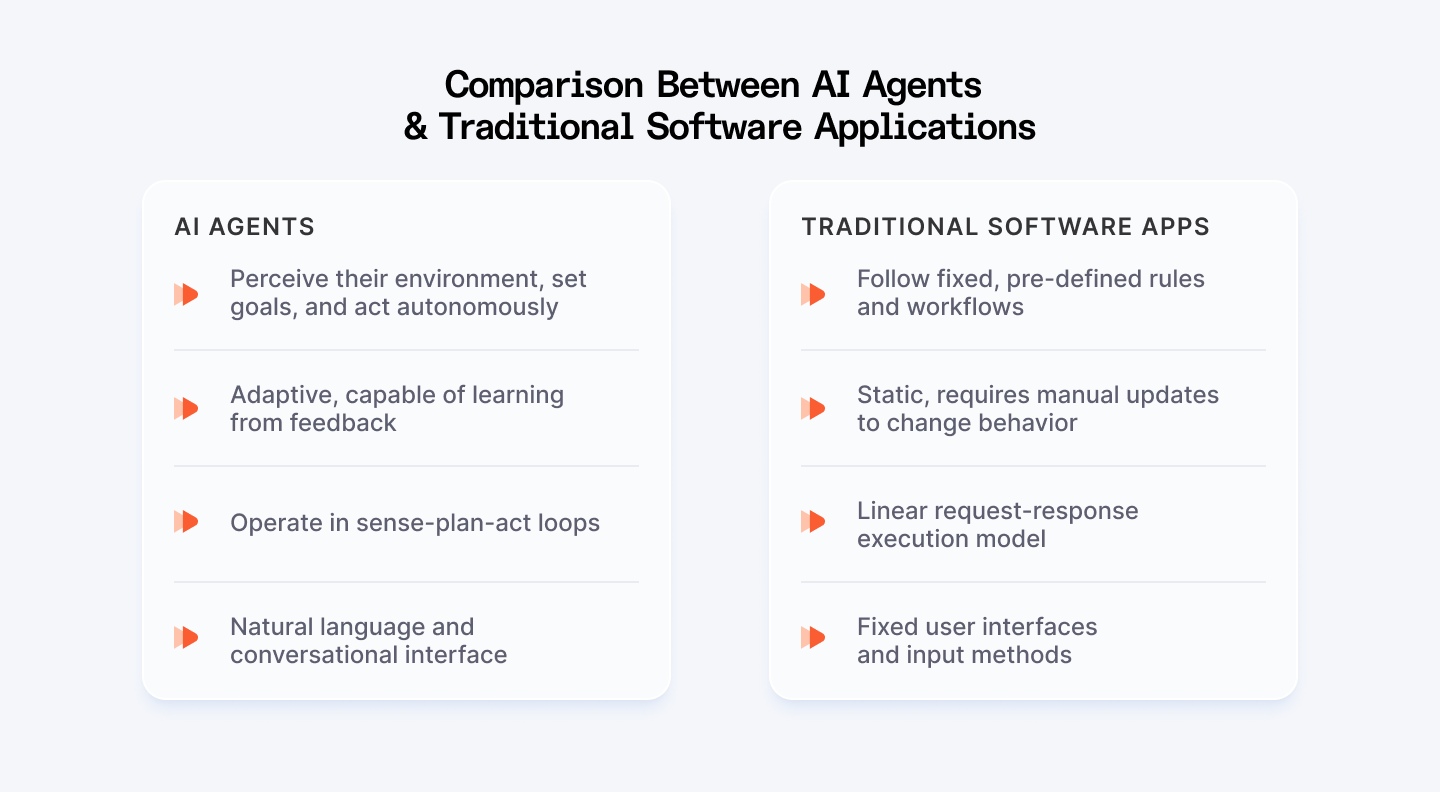
AI Agents vs Traditional Apps (2026 Comparison)
| Feature | Traditional Apps | AI Agents |
|---|---|---|
| User interaction | Manual clicks & forms | Natural language commands |
| Automation | Limited | Fully autonomous |
| Cross-platform work | Separate apps | One unified agent |
| Personalization | Static settings | Learns user behavior |
| Productivity level | Medium | High |
Winner in 2026: AI agents for complex workflows and time-saving tasks.
Real-World Use Cases of AI Agents
1. Business & Freelancers
- Automate client emails
- Generate reports
- Schedule meetings
- Track invoices
2. Content Creators & Bloggers
- Topic research
- SEO optimization
- Draft creation
- Internal linking suggestions
3. Personal Productivity
- Daily planning
- Travel booking
- Expense tracking
- Learning schedules
Popular AI Agent Platforms in 2026
- OpenAI AI Agents – Advanced task automation
- Auto-GPT-style agents – Long-term goal execution
- Enterprise AI agents – CRM, HR, finance automation
Most modern AI tools now include agent-based features rather than simple chat interfaces.
Why Big Tech Is Moving Away from Apps
Key Reasons:
- Users want fewer tools, not more
- AI agents reduce friction
- Lower development costs
- Better personalization
- Higher user retention
By 2026, many companies build AI agents first, apps second.
Are AI Agents Safe to Use?
Yes—but with precautions:
Best Practices
- Limit permissions
- Review actions logs
- Avoid sharing sensitive data
- Use trusted platforms
Should You Start Using AI Agents Now?
You SHOULD if:
- You want to save time
- You manage multiple tools
- You run a blog or business
- You value automation
You can WAIT if:
- You only use basic apps
- You prefer full manual control
Monetization Tip for Bloggers
You can naturally monetize this topic by:
- Recommending AI agent tools
- Writing tutorials with screenshots
- Comparing free vs paid plans
- Offering setup guides
Future of AI Agents Beyond 2026
Experts predict:
- AI agents managing finances
- Personal health AI assistants
- Fully autonomous business operations
This is not a trend—it’s a software revolution.
Final Thoughts
AI agents are not just replacing apps—they are replacing how humans interact with technology.
If you adapt early in 2026, you gain:
- Time
- Efficiency
- Competitive advantage
⚠️ Disclaimer
This content is for educational purposes only. It does not provide financial, medical, or legal advice. Always verify tools and platforms independently before use.