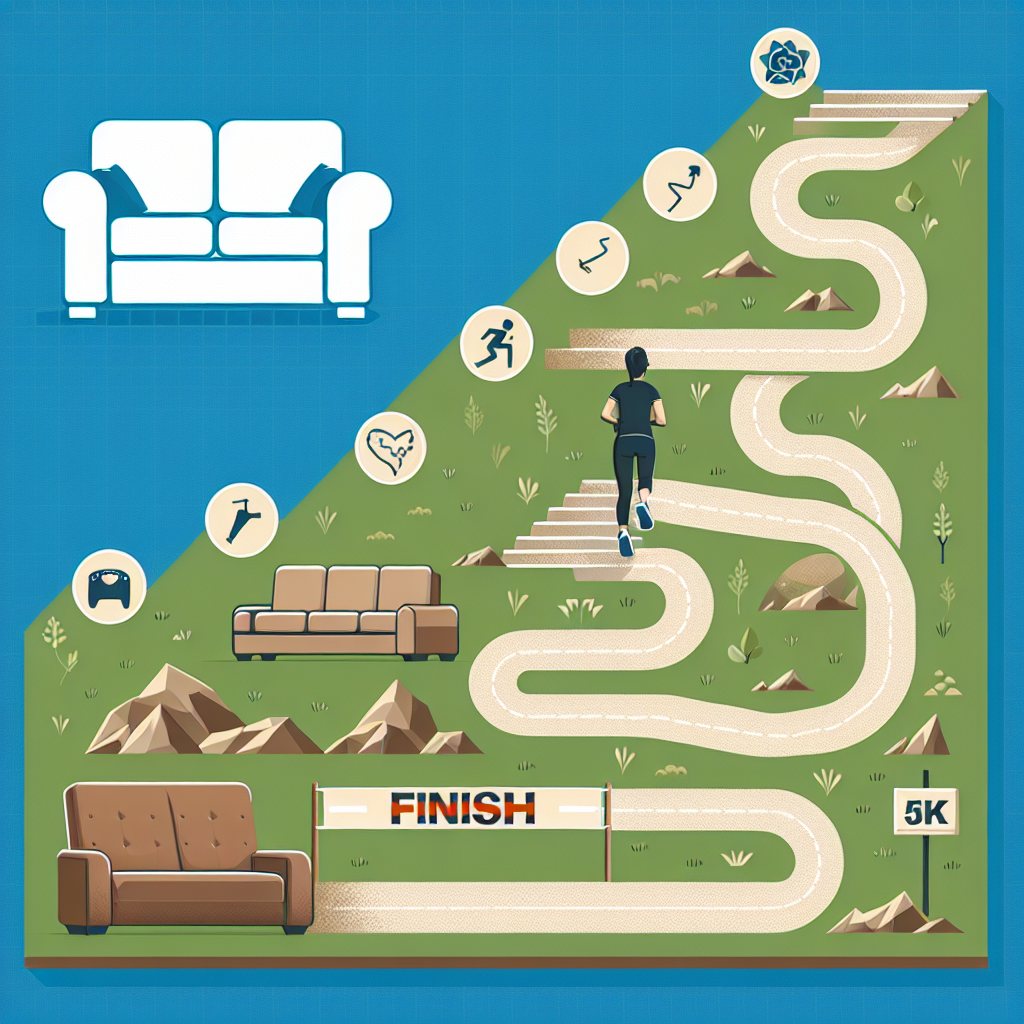
A friendly, step-by-step guide to help you go from zero to 5K with confidence—no prior running experience required.
Note: If you have any medical concerns or are returning from injury, consult a healthcare professional before starting a new exercise routine.
Why a 5K Is the Perfect First Goal
- Achievable: About 30–40 minutes of activity at a comfortable effort.
- Measurable: A clear distance and a finish line to aim for.
- Flexible: Can be trained for indoors or outdoors.
- Community: Plenty of local park runs and charity events for motivation.
- Health benefits: Builds heart health, mood, energy, and confidence.
Before You Start: Set Yourself Up for Success
- Get the right shoes: A comfortable pair of running shoes that fit well. Consider a specialty running store for guidance.
- Dress for the weather: Breathable layers, moisture-wicking socks, and reflective gear if running in low light.
- Pick your route: Flat, well-lit paths or a treadmill. Safety first.
- Plan your days: Schedule three run days per week with at least one rest day between them.
- Mindset matters: Progress isn’t linear. Consistency beats perfection.
Key Principles for Beginners
- Run-walk intervals: Strategic walking helps you build endurance safely.
- Easy effort: Most runs should feel “comfortable.” Use the talk test—if you can talk in sentences, you’re in the right zone.
- Gradual build: Increase time and intensity slowly to avoid injury.
- Recovery is training: Rest days allow your body to adapt and get stronger.
- Consistency over speed: It’s okay to go slow. The goal is finishing, not racing.
Warm-Up and Cool-Down (5–10 Minutes Each)
Warm-Up
- 3–5 minutes brisk walking
- Dynamic moves: Leg swings, ankle circles, high knees (gentle), arm circles
Cool-Down
- 3–5 minutes easy walking
- Light stretching: Calves, quads, hamstrings, hips (20–30 seconds each)
The 8-Week Couch-to-5K Plan
Schedule three runs per week (for example, Monday, Wednesday, Saturday). Add up to two optional cross-training days (cycling, swimming, brisk walking, yoga), and keep at least two rest days.
-
Week 1
Do 3 times this week:
- Warm-up, then alternate 60 seconds easy jog and 90 seconds walk x 8 (20 minutes), cool down.
-
Week 2
Do 3 times this week:
- Warm-up, then 90 seconds run / 2 minutes walk x 6, cool down.
-
Week 3
Do 3 times this week:
- Warm-up, then 90 seconds run / 90 seconds walk x 2, 3 minutes run / 3 minutes walk x 2, cool down.
-
Week 4
Do 3 times this week:
- Warm-up, then 3 minutes run / 90 seconds walk, 5 minutes run / 2.5 minutes walk, repeat once, cool down.
-
Week 5
This week has three different runs:
- Run A: 5 minutes run / 3 minutes walk x 3
- Run B: 8 minutes run / 5 minutes walk x 2
- Run C: 20 minutes continuous easy run
-
Week 6
Three varied runs to build stamina:
- Run A: 5 minutes run / 3 minutes walk, 8 minutes run / 3 minutes walk, 5 minutes run
- Run B: 10 minutes run / 3 minutes walk / 10 minutes run
- Run C: 25 minutes continuous easy run
-
Week 7
Do 3 times this week:
- 25–28 minutes continuous easy run
-
Week 8
Peaking and race week:
- Two easy runs of 28–30 minutes
- Race or time trial: 5K at comfortable effort. Start easy; finish strong if you feel good.
If any week feels too hard, repeat it. Progress at your pace.
Running Form: Simple Cues
- Posture: Tall through the crown of your head, slight forward lean from the ankles.
- Cadence: Quick, light steps; avoid overstriding.
- Arms: Relaxed swing close to your sides; hands like you’re holding a potato chip without crushing it.
- Breathing: In through nose and mouth; steady rhythm that lets you talk.
Injury Prevention and Recovery
- Build gradually: If something hurts beyond normal muscle soreness, back off or take an extra rest day.
- Strength basics (2x/week): Bodyweight squats, glute bridges, calf raises, planks (1–2 sets each).
- Shin splints tip: Slow down, check shoes, run on softer surfaces when possible, and add calf/foot strength.
- Sleep: Aim for 7–9 hours; it’s your best recovery tool.
- Hydration: Sip water throughout the day; for 30-minute runs, water before/after is usually enough.
Fueling the 5K
- Pre-run snack (60–90 minutes before): Banana, toast with honey, small yogurt—keep it light and carb-focused.
- During the run: Not needed for 5Ks; water is fine.
- Post-run: Protein + carbs within 1–2 hours (e.g., smoothie, eggs and toast, yogurt with fruit).
Stay Motivated
- Pick a date: Register for a local 5K or plan a self-supported run.
- Track progress: Use a simple log or app to note how each run felt.
- Find support: A friend, local run group, or virtual community.
- Make it easy: Keep shoes visible, schedule runs, lay out gear the night before.
- Celebrate wins: New distance, extra minute run, consistent week—acknowledge it.
Safety First
- Be visible: Reflective gear or a light in low light.
- Route awareness: Tell someone your plan; carry ID or phone.
- Headphones: Keep volume low or use one earbud to stay aware of surroundings.
- Weather: Adjust pace or move indoors for extreme heat, cold, or ice.
Race-Day Tips
- Light routine: Short warm-up walk/jog and a few dynamic moves.
- Start easy: Avoid sprinting at the start; aim for a steady pace.
- Pacing cue: If miles 1–2 feel conversational, you can gently pick it up in the final kilometer.
- Enjoy it: Smile, high-five, and soak in the atmosphere.
Troubleshooting
- Missed workouts: Resume where you left off; if uncertain, repeat the previous week.
- Side stitches: Slow down, exhale fully; try exhaling when the opposite foot strikes.
- Breathing feels hard: You’re likely going too fast—slow to a jog or walk; build gradually.
- No time: Even 20 minutes counts. Consistency adds up.
FAQ
- Can I train on a treadmill? Yes. Keep it simple with 0.5–1.0% incline to mimic outdoors.
- Should I repeat weeks? Absolutely. Move on when the current week feels manageable.
- Is walking “cheating”? No. It’s a smart tool for building endurance.
- What if I’m older or have more weight to lose? Go slower, use softer surfaces, and celebrate each step. The plan still works.