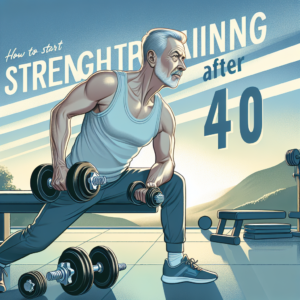

A simple, sustainable blueprint to gain muscle, keep strength, and feel athletic for decades.
Why Muscle After 40 Matters
- Prevents sarcopenia (age-related muscle loss) and supports bone density.
- Improves insulin sensitivity, joint stability, and metabolic health.
- Protects against falls, injuries, and loss of independence.
- Boosts energy, mood, and resilience through menopause or andropause transitions.
Good news: You can build muscle at any age. You may need a bit more protein, smarter recovery, and consistent effort.
Five Pillars of the Midlife Muscle Plan
- Lift regularly with purpose: 2–4 resistance sessions per week.
- Progress gradually: add reps, load, or sets over time.
- Recover like it matters: sleep, protein, and deloads.
- Eat for your goal: adequate protein, smart calories, nutrient-dense foods.
- Move daily: brisk walking, mobility, and balance work.
Training Blueprint
Frequency, Volume, Intensity
- Frequency: 2–4 days/week of resistance training.
- Volume: 10–16 challenging sets per major muscle group per week (start at 8–10 if new).
- Intensity: Choose a load you can perform for 5–15 reps per set, stopping 1–3 reps shy of failure (RPE 7–9).
- Rest: 1–3 minutes between hard sets; 2–4 minutes for heavy compound lifts.
Exercise Selection
- Each week include: squat pattern, hip hinge, horizontal push/pull, vertical push/pull, core anti-rotation or carry, and calf/hamstring work.
- Power first: 1–2 light, fast sets (e.g., med-ball throws, kettlebell swings, speed squats) to maintain explosiveness and reduce fall risk.
- Joint-friendly options: goblet squat, trap-bar deadlift, incline DB press, cable rows, landmine press, split squats, hip thrusts, assisted pull-ups.
Warm-Up (RAMP)
- Raise: 3–5 minutes brisk walk, cycle, or rowing.
- Activate/Mobilize: 5–6 moves for hips, T-spine, shoulders (e.g., glute bridges, bird-dogs, 90/90 hip rotations, band pull-aparts).
- Potentiate: 2–3 ramp-up sets of your first lift increasing load while lowering reps.
Sample Weekly Schedules
Option A: 3-Day Full-Body
- Day 1
- Power: Med-ball chest throw 3×5
- Trap-bar deadlift 3–4×5–6
- Incline DB press 3×6–10
- Chest-supported row 3×8–12
- Split squat 3×8–10/side
- Pallof press 3×10–12/side
- Day 2
- Power: Kettlebell swing 3×10 (light, crisp)
- Front or goblet squat 3–4×5–8
- Lat pulldown or assisted pull-up 3×6–10
- DB overhead press or landmine press 3×6–10
- Hip thrust or RDL 3×8–12
- Farmer carry 4×30–40 meters
- Day 3
- Power: Box jump or low step-up jump 3×3–5 (low height, soft landing)
- Romanian deadlift 3–4×6–8
- Push-up or machine press 3×8–12
- One-arm cable row 3×8–12/side
- Reverse lunge 3×8–10/side
- Calf raises + side plank 3×12–15 + 30–45s/side
Option B: 2-Day Minimalist (Busy Weeks)
- Day 1: Trap-bar deadlift 4×3–6, Push-up or bench 4×6–10, Row 4×8–12, Split squat 3×8–10/side, Carry 3×30–40m
- Day 2: Squat variation 4×4–8, Pull-up/lat pulldown 4×6–10, Overhead press 3×6–10, Hip hinge or hip thrust 3×8–12, Core anti-rotation 3×10–12/side
Home/Gym-Light Option (30–40 minutes)
- EMOM 20 minutes alternating:
- Minute 1: DB goblet squat 8–12
- Minute 2: Push-up 8–12
- Minute 3: One-arm DB row 8–12/side
- Minute 4: RDL 10–12
- Progress by reps, then weight.
Progression and Deloads
- Add 2–5% load when you hit top reps on all sets, or add 1–2 reps/set each week.
- Every 4–8 weeks: take a deload (reduce volume by ~30–50% for 1 week) or train at RPE 6–7.
- If a joint hurts >24–48 hours or pain >3/10 during lifts, switch to a friendlier variation, reduce range, or decrease load.
Cardio, Conditioning, and Mobility
- Zone 2 aerobic base: 2–3 sessions/week, 30–45 minutes at conversational pace (brisk walk, cycle, rowing).
- Optional intervals: 1 day/week, e.g., 6×1 minute hard, 2 minutes easy.
- Daily movement: 7,000–10,000 steps; rucking or hills for variety.
- Mobility: 10 minutes most days focusing on hips, ankles, thoracic spine, shoulders.
- Balance: add single-leg stands, heel-to-toe walks, or carries 2–3x/week.
Nutrition for Muscle After 40
Calories by Goal
- Fat loss: modest deficit of ~300–500 kcal/day to preserve performance and hormones.
- Recomposition/maintenance: around maintenance; focus on protein and training quality.
- Muscle gain: small surplus of ~150–300 kcal/day to minimize fat gain.
Protein
- Target 1.6–2.2 g/kg body weight per day. If overweight, use goal/lean mass.
- Distribute across 3–5 meals with 25–40 g high-quality protein each; aim for ~2.5–3 g leucine per meal (eggs, dairy, whey, lean meats, soy).
- Post-workout protein within a few hours helps, but total daily intake matters most.
Carbs and Fats
- Carbs: 2–4 g/kg/day (more on hard training days), include fruit, grains, potatoes, legumes.
- Fats: 0.6–1.0 g/kg/day from olive oil, nuts, seeds, avocado, fatty fish.
- Fiber: 25–35 g/day; hydrate with 2–3+ liters water/day.
- Alcohol: minimal; it impairs muscle protein synthesis and sleep.
Supplements (Optional)
- Creatine monohydrate: 3–5 g daily; safe for most, supports strength and cognition.
- Whey or plant protein: convenience to hit protein targets.
- Vitamin D3 if deficient (test first); follow clinician guidance.
- Omega-3s: 1–2 g EPA+DHA/day for heart and joint health.
- Magnesium glycinate: 200–400 mg in the evening may aid sleep.
- Caffeine: ~3 mg/kg pre-workout if tolerated; cut off by early afternoon.
- For tendon support: 10–15 g collagen + 50 mg vitamin C 30–60 minutes before rehab loading.
Recovery, Hormones, and Stress
- Sleep: 7–9 hours; dark, cool room; consistent schedule; limit screens 60 minutes before bed.
- Stress: 5–10 minutes/day of breathwork, walks, or mindfulness keeps recovery high.
- Menopause and andropause: training, protein, and sleep are potent; HRT/TRT are medical decisions—discuss with a clinician if symptoms affect life or training.
- Red flags: unexplained fatigue, persistent low mood, low libido, or plateau despite consistency—consider labs and a medical check.
Injury-Proofing and Joint Care
- Technique first; use full, comfortable ranges without pain.
- Respect tendons: progress volume and impact gradually; include isometrics (e.g., 5x30s calf raise holds) if tendons are irritable.
- Use variations that fit you: heels-elevated squats for ankles, neutral-grip pressing for shoulders, trap-bar for backs.
- Pain guide: 0–3/10 acceptable if it subsides within 24 hours; >3/10 or worsening—modify or swap the movement.
Tracking Progress
- Strength log: reps, sets, loads, and RPE each session.
- Body metrics: monthly photos, waist measurement, and how clothes fit.
- Performance: easier stairs, faster walks, stronger carries—real-life wins matter.
- Readiness: if sleep, mood, or performance dip for a week, reduce volume/intensity by 20–40% and focus on recovery.
A Simple 12-Week Outline
- Weeks 1–4 (Foundation): Learn technique, start at lower volume (8–10 sets/muscle/week), RPE 6–8.
- Weeks 5–8 (Build): Add a set to key lifts, RPE 7–9, keep 1–3 reps in reserve.
- Week 9 (Deload): Reduce volume by ~40–50%, focus on form.
- Weeks 10–12 (Peak and Protect): Return to prior volume; choose one lift/week to push heavier; emphasize power sets first.
Quick Answers
- Will lifting make me bulky? No—muscle gain is gradual; you control it with food and volume.
- What if my knees or back hurt? Use friendlier variations, shorten the range, slow tempo, or swap exercises—keep training around the issue.
- Best time to train? The time you can be consistent. Eat a protein-rich meal within a few hours before or after.