
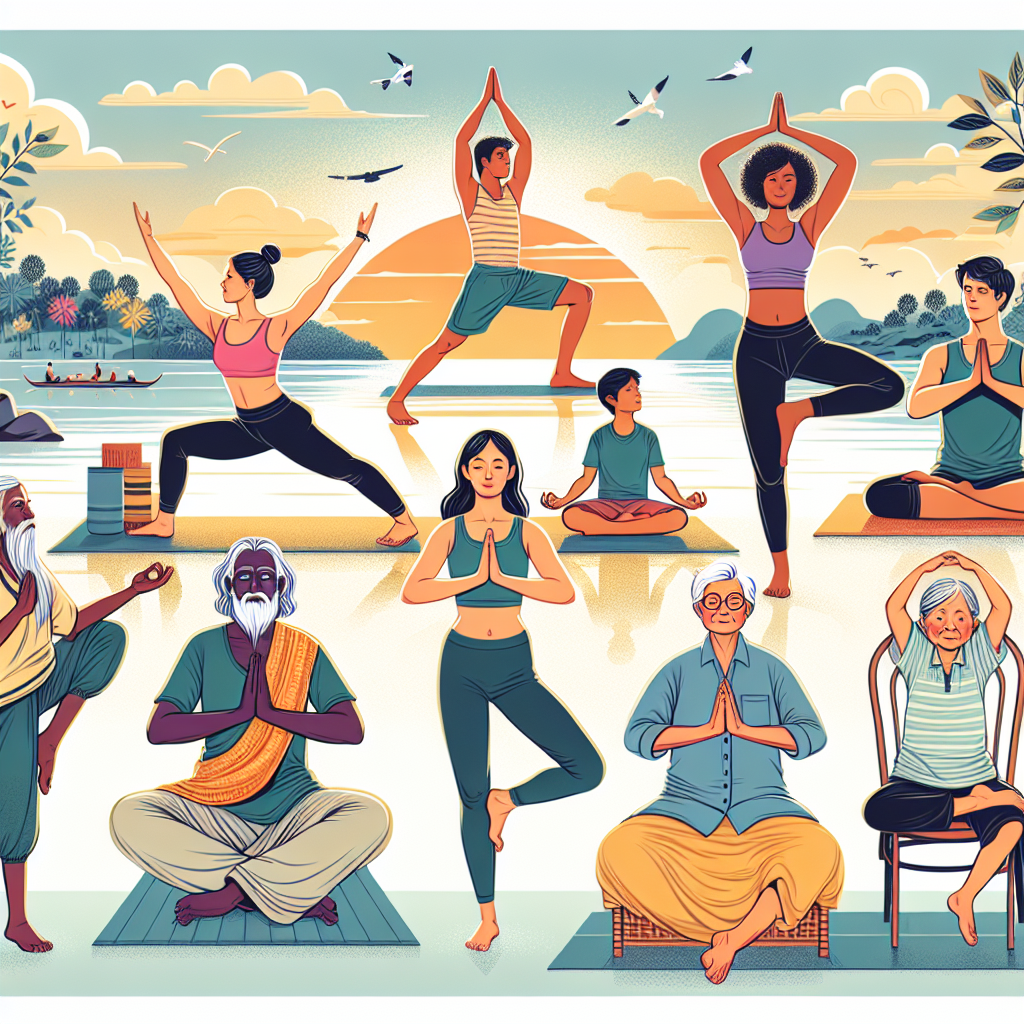
Gentle, adaptable, and backed by growing research, yoga offers an inclusive path to strength, mobility, and calm—no matter your age, body, or experience.
What Is Mindful Movement?
Mindful movement is the practice of moving with awareness. In yoga, this means coordinating breath, posture, and attention to cultivate strength, mobility, balance, and emotional ease. It is not about how a pose looks; it’s about how it feels and what you notice along the way.
Why Yoga for All
- It’s adaptable: poses can be modified for any body, age, or ability.
- It’s scalable: you can start with a chair or mat and progress at your pace.
- It’s holistic: yoga supports physical health while calming the mind.
Whether you’re new to movement, returning from injury, pregnant, managing stress, or looking to complement other training, yoga can meet you where you are.
Benefits of Yoga and Mindful Movement
Physical
- Mobility and flexibility through controlled range of motion
- Strength and stability via bodyweight loading and isometric holds
- Balance and coordination, supporting fall prevention as we age
- Posture awareness and core support
- Back care: gentle yoga may help with chronic low back pain for some people
- Recovery and relaxation between higher‑intensity workouts
Mental and Emotional
- Stress management by activating the body’s relaxation response
- Improved focus and emotional regulation
- Better sleep quality for many practitioners
Research suggests yoga can support overall well‑being and quality of life. Individual results vary; consistency matters more than intensity.
Finding a Style That Fits
- Hatha: steady, beginner‑friendly pace with foundational poses.
- Vinyasa/Flow: coordinated breath and movement, variable intensity.
- Yin: longer, gentle holds targeting tissues at comfortable ranges.
- Restorative: fully supported poses for deep rest and nervous system down‑shifting.
- Iyengar: alignment‑focused, extensive use of props and modifications.
- Chair Yoga: seated and supported standing poses for accessibility.
Tip: Sample a few teachers. Teaching style can matter as much as the class type.
Accessible Options and Modifications
- Props: use blocks, straps, a chair, or cushions to bring the floor to you.
- Chair Yoga: ideal for work breaks, balance concerns, or limited mobility.
- Pregnancy and Postpartum: choose prenatal‑informed classes; avoid poses that compress the belly or overtax the core.
- Larger Bodies: explore classes and teachers experienced in size‑inclusive options.
- Seniors/Healthy Aging: focus on balance, gentle strength, and joint mobility.
- Trauma‑Informed: emphasizes choice, invitational language, and self‑paced practice.
- Chronic Pain or Fatigue: short, frequent sessions; prioritize comfort and recovery.
Breath and Mindfulness Basics
Simple breath practices can calm the mind and guide movement:
- Diaphragmatic breathing: inhale through the nose, letting the ribs and belly expand; exhale softly.
- Extended exhale: breathe in for 4, out for 6–8 to encourage relaxation.
- Box breath (optional): inhale 4, hold 4, exhale 4, hold 4. Skip holds if they feel uncomfortable.
Mindfulness cues: notice sensations, move within comfortable ranges, and release judgment about “how it should look.”
A 10‑Minute Beginner Sequence
Practice on a non‑slip surface. Move slowly, breathe naturally, and skip anything that doesn’t feel right today.
-
Centering (1 minute)
- Sit or stand comfortably. Close or soften your eyes. Notice your breath and how your body feels today.
-
Cat–Cow (1–2 minutes)
- On hands and knees (or seated with hands on thighs): inhale to gently arch, exhale to round. Move with your breath.
-
Child’s Pose or Seated Fold (1 minute)
- Knees apart, big toes together, hips toward heels; rest head on hands or a cushion.
- Chair option: fold forward onto thighs with forearms on a desk or seat.
-
Low Lunge (2 minutes total)
- Step right foot forward, back knee down. Lift chest; add arms overhead if comfortable. Switch sides.
- Use blocks under hands or hold a chair for support.
-
Half Sun Salute (2 minutes)
- From standing: inhale reach arms up, exhale hinge halfway forward with hands to shins, inhale lengthen spine, exhale stand tall.
- Chair option: hands on back of a chair as you hinge.
-
Balance: Tree (1 minute total)
- Stand tall; place one foot to ankle or calf (not knee). Lightly touch a wall if needed. Switch sides.
-
Rest: Savasana or Seated Rest (2 minutes)
- Lie down with knees supported or sit comfortably. Soften jaw and shoulders. Notice your breath.
Safety Tips
- Consult a healthcare provider if you have specific conditions (e.g., recent injury or surgery, osteoporosis, glaucoma, uncontrolled blood pressure, pregnancy).
- Discomfort signals exploration; sharp or escalating pain is a cue to stop or modify.
- Progress gradually: smaller ranges, shorter holds, and fewer repetitions at first.
- Breathe steadily; avoid holding your breath during effort.
- Honor your body’s limits, especially if you’re hypermobile or returning after time off.
How to Get Started
- Pick a realistic schedule: 10–20 minutes, 3–4 times per week.
- Create a small, clear space with a mat or firm surface.
- Gather simple props: a chair, two books or blocks, a strap or scarf, and a cushion.
- Choose a beginner or gentle class (in person or online) with clear cueing and modifications.
- Look for experienced, inclusive, or trauma‑informed teachers; let them know about injuries or concerns.
- Track how you feel after sessions (energy, mood, sleep) to fine‑tune your routine.
FAQs
Do I need to be flexible?
No. Flexibility can improve with consistent, comfortable practice. Yoga meets you where you are.
Is yoga enough for fitness?
Yoga can build mobility, balance, and strength. For comprehensive fitness, include cardio and resistance training if appropriate for you.
Can yoga help with stress or sleep?
Many people find that gentle movement and slower breathing reduce stress and support better sleep.
How often should I practice?
Short, regular sessions (even 10 minutes) are effective. Consistency matters more than duration.
Resources and Further Reading
- National Center for Complementary and Integrative Health (NCCIH): Yoga overview and research
- American College of Sports Medicine: Exercise guidelines and aging
- Harvard Health Publishing: Articles on yoga for stress and back pain
- Local community centers and libraries: often offer low‑cost or free beginner and chair yoga classes
Note: Resources are for education and are not a substitute for professional medical advice.
Step onto Your Mat—Your Way
Yoga is not about touching your toes; it’s about what you discover on the way down. Start small, stay curious, and let mindful movement support your body and mind—today and over time.
