
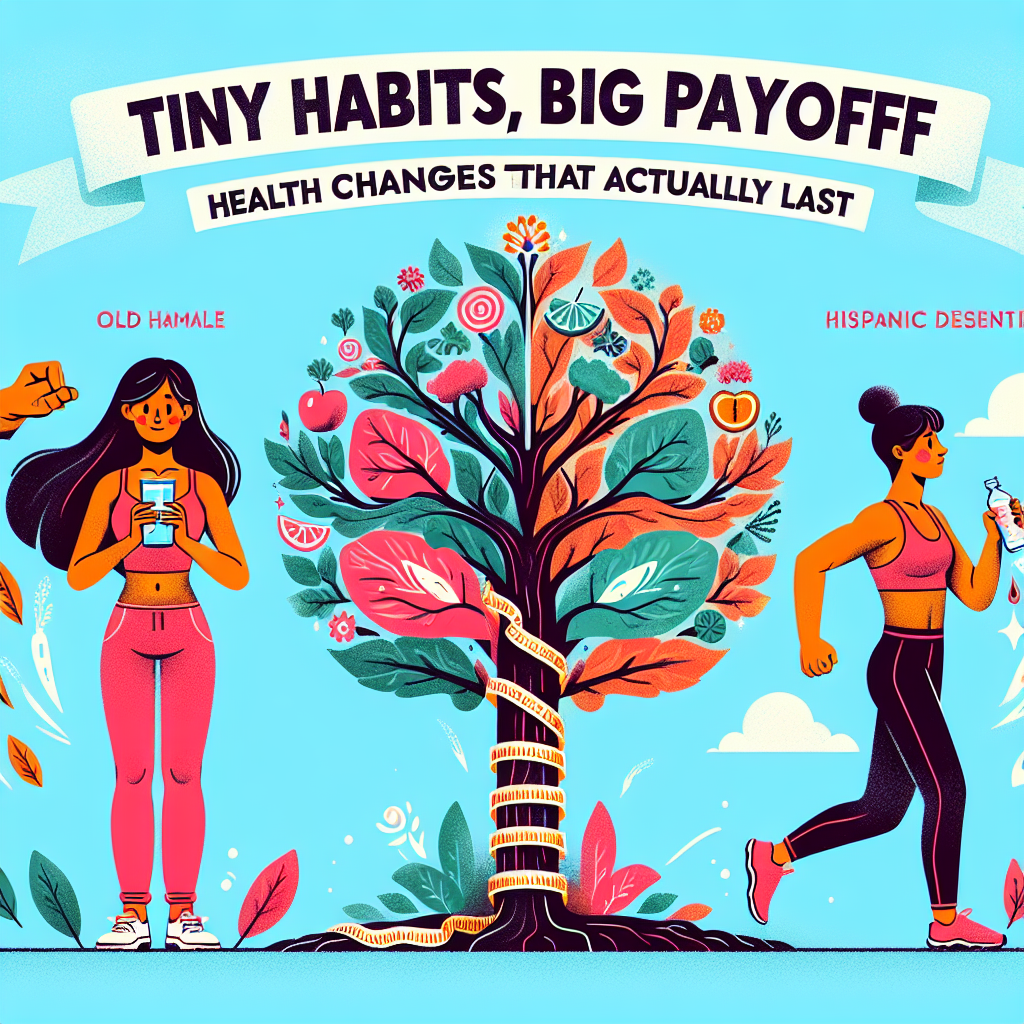
Most resolutions fail not because your goals are wrong, but because the behaviors are too big. Shrink the action, link it to your day, and repeat. That’s how health changes finally stick.
Why tiny works
- Lower friction beats high motivation. According to behavior science (e.g., the BJ Fogg model), actions happen when ability is high, prompts are clear, and motivation is “good enough.” Tiny boosts ability.
- Consistency compounds. Small, repeatable actions create routines, which reduce decision fatigue and make health feel “automatic.”
- Immediate wins keep you going. Quick, doable habits deliver fast feedback and positive emotion—fuel that keeps the loop going.
- Identity follows action. Repeated tiny behaviors help you see yourself as “the kind of person who…,” which stabilizes long-term change.
How to build a tiny habit
- Pick an aspiration: “Feel energetic,” “Sleep better,” “Be stronger.”
- Design a 30-second action (or less). If it takes longer, make it smaller.
- Examples: One push-up. One deep breath. Fill a water bottle. Floss one tooth. Put running shoes by the door.
- Attach it to an anchor moment (a reliable part of your day).
- Formula: After I [anchor], I will [tiny behavior]. Then I will [celebrate].
- Example: “After I start the coffee maker, I will pour a glass of water. Then I’ll smile and say ‘Nice job.’”
Optional power-ups:
- Implementation intention: “If it’s 12:30 p.m. and I clear my plate, then I’ll walk for 2 minutes.”
- Environment design: Put the fruit bowl on the counter; move social apps off your home screen; place your yoga mat where you step in the morning.
- Ceiling and floor: Set a minimum you always hit (floor) and a maximum to avoid burnout (ceiling). Example: Floor = 1 push-up, Ceiling = 20.
Tiny habit ideas for big health domains
Movement
- After I brush my teeth, I’ll do 5 calf raises.
- After I hang up a call, I’ll stand and stretch for 30 seconds.
- After lunch, I’ll walk to the end of the block (or 2 minutes indoors).
- After I boil water for tea, I’ll do a 20-second wall sit.
Nutrition
- After I start breakfast, I’ll add a serving of fruit or protein.
- After I put my keys down at home, I’ll place a glass of water on my desk.
- After I open the fridge for dinner, I’ll put veggies on the plate first.
- After 3 p.m., I’ll switch any sweetened drink to water or sparkling water (choose specific days if daily is too hard).
Sleep
- At 9 p.m., I’ll set my phone to Do Not Disturb and plug it in outside the bedroom.
- After I brush at night, I’ll dim the lights or close one screen.
- After I get in bed, I’ll read one page (paper beats phone).
Stress and mental health
- After I sit at my desk, I’ll take three slow breaths (4 in, 6 out).
- After I close my laptop, I’ll write one line about something that went well.
- After I make coffee, I’ll text one friend “Thinking of you.”
Dental and self-care
- After dinner, I’ll floss one tooth (you’ll often floss more, but one is a win).
- After I shower, I’ll apply sunscreen to face and neck.
Posture and mobility
- After I send a calendar invite, I’ll do 10 shoulder rolls.
- After I microwave something, I’ll do a 30-second hip stretch.
Screen time and focus
- At 8 p.m., my phone switches to grayscale (schedule it).
- After I sit to work, I’ll set a 25-minute focus timer and silence notifications.
Make it easy to do the right thing
- Surface the cue: Put a water bottle on your keyboard at night so you must move it to start work.
- Remove friction: Pre-chop veggies; lay out workout clothes; default to a weekly grocery order.
- Bundle temptation: Pair a walk with your favorite podcast or show.
- Use gentle commitment: Tell a friend your plan; put a tiny stake in the game (e.g., donate $5 if you skip your floor for two days in a row).
Progress without burnout
- Scale only when it’s “too easy.” Let boredom be your green light to grow the habit.
- Keep streaks flexible: Aim for “never miss twice.” If you miss, do the floor the next day.
- Measure what you control (leading indicators): minutes moved, veggies added, bedtime started—rather than weight or steps alone.
Tracking and rewards
- Use a tiny tracker: a checkbox on a sticky note or a simple app. Keep it visible.
- Celebrate immediately: a smile, fist pump, or “Yes!” signals your brain to repeat the behavior.
- Reward the streak, not the scale: Treat yourself to a new playlist, a book, or time outdoors after a week of consistency.
Troubleshooting guide
- If you forget: Attach the habit to a stronger anchor (e.g., after brushing, after brewing coffee). Add a visual cue where the habit happens.
- If it feels hard: Shrink it. Make the first step trivial (put on shoes, fill bottle, stand up).
- If you’re busy: Use “micro versions” on hectic days (one minute of movement, one breath, one veggie).
- If it’s boring: Rotate 2–3 versions of the same habit (walk route A/B/C, different stretches).
- If travel breaks you: Define a portable version (hotel-room squats, stretch while shower heats, bottled-water rule).
- If results stall: Improve sleep and protein/produce first—keystone habits that boost energy and willpower.
A 14-day tiny-habit starter plan
- Days 1–3: Choose 1–3 tiny habits (one per domain is plenty). Write them in the anchor formula.
- Days 4–5: Set up environments and cues. Put tools in the path of your routine.
- Day 6: Start tracking with a simple checkbox. Celebrate each check.
- Day 7: Review what worked; shrink anything you missed twice.
- Days 8–10: Let one habit grow slightly if it feels effortless.
- Day 11: Plan an obstacle and your “if-then” response.
- Days 12–14: Keep the floor, protect your streak, and schedule a small reward.
Examples you can copy
- After I start the coffee maker, I pour a glass of water and take three breaths.
- After I brush my teeth at night, I floss one tooth and dim the lights.
- After lunch, I walk for two minutes while listening to a favorite song.
- At 9 p.m., my phone goes on Do Not Disturb and charges outside the bedroom.
Final thoughts
Big transformations aren’t made of big actions—they’re built from small, repeatable ones that fit your real life. Pick one tiny habit, tie it to a reliable moment, and make it so easy you can’t say no. The payoff grows quietly, then all at once.
Note: This article is for general education and is not medical advice. If you have a health condition, consult a qualified professional before making changes.