
Smart training isn’t only about how hard you push—it’s also about how well you recover. Active recovery days are the bridge between hard sessions and consistent progress, helping you bounce back faster while keeping your body moving and your mind engaged.
What Is Active Recovery?
Active recovery is low-intensity movement performed on non-training days or between hard sessions. The goal is to enhance restoration without adding meaningful fatigue. Think easy cardio, mobility, breathing, light skill drills, and gentle tissue work.
Why It Works
- Increases blood and lymph flow, helping deliver nutrients and clear metabolic byproducts linked to fatigue.
- Reduces stiffness by keeping connective tissues gliding and joints lubricated through a full but comfortable range of motion.
- Supports the parasympathetic nervous system (the “rest-and-digest” side), lowering stress and improving sleep readiness.
- Maintains movement quality and technique patterns without the cost of high intensity.
- Builds durability over time: gentle movement can aid capillary density, tendon health, and coordination.
What Counts as Active Recovery
- Easy cardio: walking, easy cycling, light rowing, relaxed swimming
- Mobility and flexibility: dynamic mobility flows, gentle yoga, controlled articular rotations
- Breathing and relaxation: diaphragmatic breathing, box breathing, light mobility paired with breaths
- Light technical drills: form work, footwork ladders, low-amplitude skips, band activation
- Soft-tissue care: foam rolling, light massage, trigger-point ball (short sessions)
- Non-exercise activity: yard work, leisurely hiking, errands on foot
Note: If it leaves you noticeably tired, short of breath, or sore the next day, it was too intense for recovery.
How Hard and How Long?
- Intensity: RPE 2–4/10. You should be able to breathe through your nose or hold a full conversation.
- Heart rate: roughly 55–70% of max (Zone 1–low Zone 2 for most people).
- Duration: 20–45 minutes of easy movement plus 10–20 minutes of mobility and breathing.
- Frequency: 1–3 times per week, placed after your hardest sessions or during deload weeks.
Tailor It to Your Sport and Goals
Strength and Power Athletes
- Prioritize joint-friendly blood flow: sled drags, easy cycling, banded work.
- Avoid high eccentric stress; keep tempos smooth and ranges pain-free.
- Add 10–15 minutes of mobility for hips, thoracic spine, and ankles.
Endurance Athletes
- Choose the primary modality at very easy intensity or cross-train to reduce impact.
- Include light technique drills (posture, cadence, strides at 60–70% effort).
- Cap duration to prevent turning recovery into extra training load.
Team and Court/Field Sports
- Emphasize CNS downshift: easy bike, mobility, breathwork, light tempo passes/skills.
- Short bouts of tissue care for hotspots (calves, hip flexors, adductors).
Beginners and Older Adults
- Walks, gentle cycling, pool sessions, and balance work are excellent choices.
- Keep sessions short (20–30 minutes) and finish feeling better than you started.
Your Recovery Stack: Beyond Movement
- Sleep: 7–9 hours; keep wake/bed times consistent.
- Protein: roughly 1.6–2.2 g/kg/day across 3–4 meals to support repair.
- Carbohydrates: adjust to training load to replenish glycogen; include a carb-protein meal within a few hours of hard sessions.
- Hydration: sip fluids through the day; include electrolytes (especially sodium) if you sweat heavily.
- Heat and cold: heat or sauna can relax tissues; cold can reduce soreness but may blunt strength/hypertrophy adaptations if used immediately after lifting—use strategically.
- Stress management: 5–10 minutes of breathing, meditation, or a quiet walk.
Red Flags: When to Go Easier or Rest
- Sharp pain versus normal soreness, joint swelling, or altered movement mechanics
- Resting heart rate unusually elevated, big drop in motivation, poor sleep, or persistent fatigue
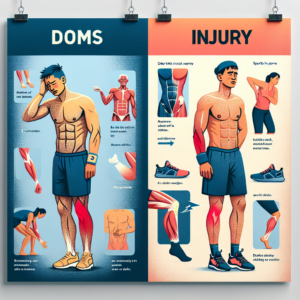
- DOMS persisting beyond 72 hours or worsening with activity
If these occur, shift to very gentle mobility or passive rest and consider consulting a qualified professional.
Sample 35–45 Minute Active Recovery Session
- Breathing reset (3–5 minutes): 4-second inhale, 6-second exhale through the nose, lying on your back or seated tall.
- Easy cardio (15–25 minutes): walk, cycle, or swim at conversational pace (RPE 3/10).
- Mobility flow (10–12 minutes):
- Thoracic rotations x 6/side
- 90/90 hip switches x 8/side
- Ankle rocks x 10/side
- World’s greatest stretch x 4/side
- Cat-cow x 8
- Light tissue work (3–5 minutes): foam roll calves, quads, lats—slow, non-painful passes.
- Downshift (2–3 minutes): slow nasal breathing or a quiet walk.
Common Mistakes to Avoid
- Going too hard: if you’re sweating heavily, chasing a pace, or logging PRs, it’s not recovery.
- Too much novelty: avoid new intense drills that cause extra soreness.
- Skipping sleep and nutrition: movement helps, but recovery depends on the basics.
- All-or-nothing thinking: even 10–15 minutes of easy movement makes a difference.
Weekly Placement Ideas
- After your hardest day (e.g., long run, heavy lower body, or intense game)
- Mid-week reset to keep momentum without fatigue
- During deload weeks, 2–3 active recovery sessions can maintain rhythm while reducing load