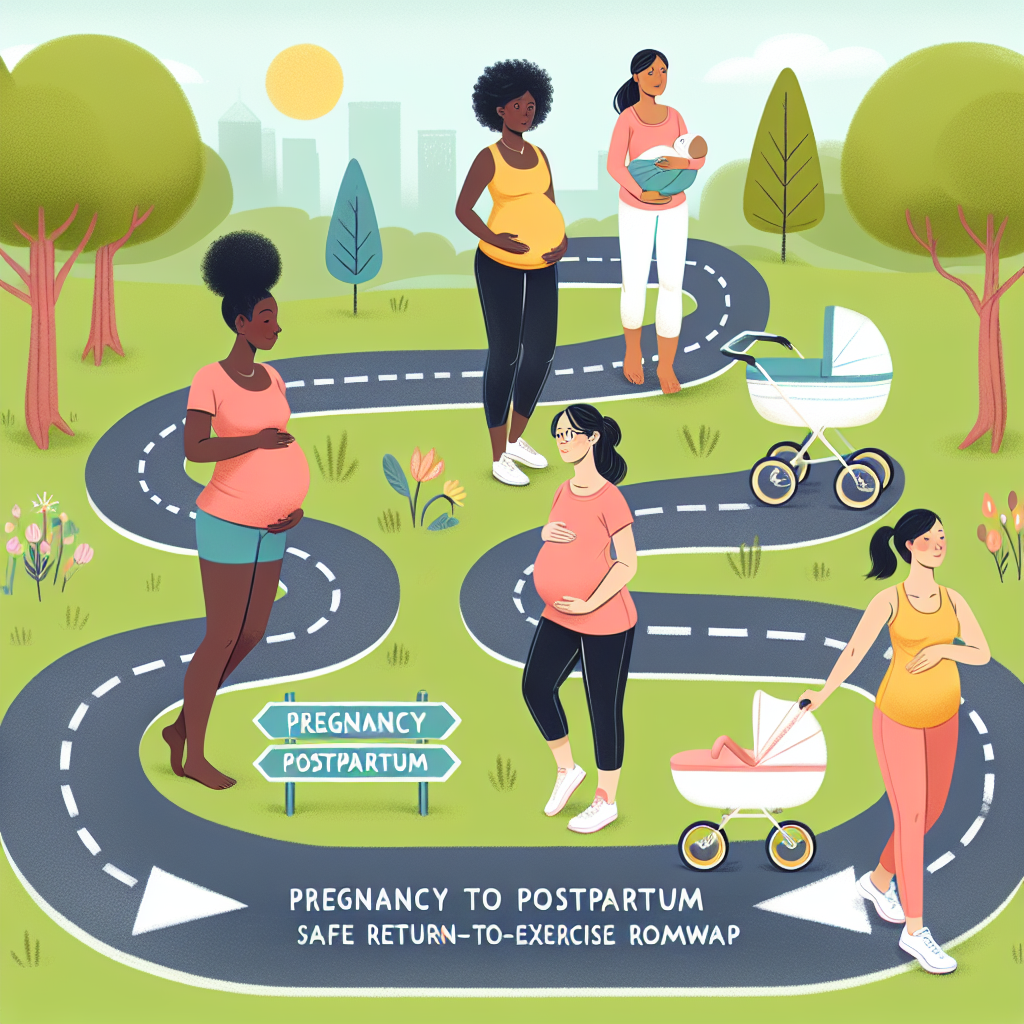
Purpose: A practical, evidence-informed guide to staying active during pregnancy and returning to exercise safely after birth.
Medical disclaimer: This is general information, not a substitute for personalized medical care. Get clearance from your healthcare provider, and consult a pelvic floor physical therapist if you have pelvic floor symptoms, significant abdominal separation, or pain.
Quick Roadmap
- During pregnancy: Aim for 150+ minutes/week of moderate activity plus 2+ days of strength. Use the talk test and avoid high-risk activities.
- 0–2 weeks postpartum: Rest, breathwork, gentle pelvic floor, short walks as tolerated.
- 2–6 weeks postpartum: Progress walking, core connection, light mobility and bodyweight strength if symptoms-free.
- 6–12 weeks postpartum: After medical check, reintroduce structured strength and low-impact cardio; assess readiness before impact.
- 12+ weeks postpartum: Gradually reintroduce running/impact if criteria met; continue progressive strength and conditioning.
Exercise During Pregnancy
Unless you have a medical contraindication, activity is safe and beneficial in pregnancy, reducing risk of excessive weight gain, gestational diabetes, hypertensive disorders, and improving mood and fitness.
General Targets (FITT)
- Frequency: Most days of the week.
- Intensity: Moderate most days (talk test: you can speak in full sentences; RPE 4–6/10). Include light-to-moderate strength (RPE 5–7/10). Avoid breath-holding/straining (no Valsalva).
- Time: Total 150–300 minutes/week; break into 10–20 minute bouts as needed.
- Type: Walking, stationary cycling, swimming, low-impact aerobics, prenatal yoga/pilates, resistance training with good technique.
Trimester-Specific Notes
- First trimester: Manage fatigue/nausea; shorter, frequent sessions are fine. Avoid overheating; hydrate.
- Second trimester: From ~20 weeks, limit prolonged supine (flat on back) exercise if symptomatic; elevate torso if needed. Emphasize posture, glute/upper-back work.
- Third trimester: Prioritize comfort, balance, pelvic-floor-friendly core. Widen stance, use supports, reduce impact as needed.
Core and Pelvic Floor
- Practice 360 breathing: inhale to ribs and abdomen, exhale gently engage deep core and pelvic floor.
- Favorable core moves: side-lying or elevated planks, bird-dog, heel slides, tall-kneeling chops, carries.
- Avoid sustained breath-holding, max-effort bracing, and late-pregnancy high-pressure moves (e.g., heavy crunches, max lifts).
What to Avoid
- Contact, collision, or fall-risk sports; scuba diving; high altitude if not acclimatized; hot yoga/sauna.
- Any activity causing pain, dizziness, vaginal bleeding, fluid leakage, regular painful contractions, chest pain, or shortness of breath out of proportion.
Birth and Early Considerations
Recovery needs vary with vaginal delivery, perineal tears, operative delivery, and cesarean birth. Fatigue, hormonal changes, and tissue healing affect capacity. Prioritize rest, nutrition, hydration, and gradual re-loading.
Postpartum 0–2 Weeks: Reset and Restore
- Focus: Sleep/rest, gentle mobility, breathwork, circulation.
- Breathing: 2–3 sessions/day of 360 breathing with soft pelvic floor engagement on exhale.
- Pelvic floor: Gentle contractions (submaximal “lift and let go”), 5–10 reps, a few times daily if comfortable.
- Walking: Short, flat walks around home or outdoors as energy allows.
- C-section: Support incision with a pillow when coughing/sneezing; avoid lifting heavier than the baby until cleared.
Postpartum 2–6 Weeks: Foundations
- Gradually increase walk duration and frequency if no increase in bleeding or pelvic symptoms.
- Begin gentle core work: heel slides, marches, pelvic tilts, supported side planks, bird-dog, glute bridges.
- Add light mobility: thoracic rotations, hip flexor and calf stretches.
- Bodyweight strength as tolerated: sit-to-stands, wall push-ups, light rows with bands, carries.
- Pause and regress if you notice heaviness/dragging in the pelvis, urinary/anal leakage, doming/coning of the abdomen, or pain.
Postpartum 6–12 Weeks: Build Capacity
After your medical check, reintroduce structured training if symptoms are well-controlled.
- Strength training: 2–3 days/week; start with lighter loads and higher reps (8–15), RPE 5–7/10. Include squat, hinge, push, pull, carry, calf raises, and rotational control.
- Low-impact cardio: Brisk walking, cycling, elliptical, swimming. Progress time before intensity.
- Core/pelvic floor: Continue graded loading; manage intra-abdominal pressure with exhale on effort.
Impact and Running Readiness
Many will be ready for impact around 12+ weeks postpartum, but readiness is criteria-based. Before starting, you should be able to complete, symptom-free:
- Walk 30 minutes at a brisk pace
- Single-leg balance 10 seconds each side
- 20 calf raises each leg
- 10 controlled step-downs each leg
- 5 single-leg squats each leg
- 10 forward hops each leg and 10 jogging-in-place contacts without pain, heaviness, leakage, or doming
- Plank (front/side) 45 seconds with good form
Postpartum 3–12 Months and Beyond: Performance and Return to Sport
- Running/impact: Introduce with walk-jog intervals; increase one variable at a time (time, then frequency, then intensity).
- Strength: Progress loads toward pre-pregnancy levels; prioritize posterior chain, single-leg work, and core anti-extension/rotation.
- Agility and sport: Add change-of-direction drills and plyometrics when symptom-free and strength base is solid.
- Breastfeeding notes: Extra calories and hydration; consider high-impact volume carefully due to transient bone density changes; supportive, well-fitted bra.
Special Considerations
Cesarean Birth
- Protect healing for the first 6 weeks; avoid heavy lifting and deep flexion/rotation that strains the incision.
- Once healed, begin gentle scar desensitization and mobility; progress core gradually.
Pelvic Floor Symptoms
- Symptoms include leakage, urgency, pelvic heaviness/bulge, pain with penetration, or tailbone pain.
- Seek a pelvic floor physical therapist; loading can continue with modifications guided by symptoms.
Diastasis Recti (Abdominal Separation)
- Check width and depth above/below the navel; focus on tension/pressure management rather than width alone.
- Modify if you see persistent coning/doming; train with exhale on effort and choose exercises that create good abdominal tension.
Medical Conditions
- Postpartum preeclampsia, anemia, thyroid dysfunction, or persistent pain warrant medical guidance before progressing.
Sample Weekly Plans
Pregnancy (example week)
- Mon: 30 min brisk walk + band rows and sit-to-stands (2×12)
- Tue: Prenatal yoga (30–45 min)
- Wed: Stationary bike 20–30 min (moderate)
- Thu: Strength full-body: squats, hip hinges, presses, pulls, carries (2–3 sets of 8–12)
- Sat: Swim or walk 30–45 min
Postpartum 0–2 Weeks
- Daily: 2–3 x 5 minutes 360 breathing + gentle pelvic floor; 5–10 minute easy walk as tolerated
Postpartum 6–12 Weeks
- Mon: Walk 25–35 min + core circuit (heel slides, bird-dog, side plank; 2×8)
- Wed: Strength (goblet squat, hip hinge, row, overhead press light, carries; 2–3×10–12)
- Fri: Cycle or swim 20–30 min + calf raises and step-downs
Return-to-Running 8-Week Starter (begin at ≥12 weeks postpartum if criteria met)
Perform 2–3 sessions/week, non-consecutive days. Progress only if symptom-free.
- Week 1: 1 min jog / 2 min walk x 8
- Week 2: 2 min jog / 2 min walk x 6
- Week 3: 3 min jog / 1 min walk x 6
- Week 4: 4 min jog / 1 min walk x 5
- Week 5: 10 min continuous jog, walk 2 min, 10 min jog
- Week 6: 15–20 min continuous jog
- Week 7: 20–25 min continuous jog
- Week 8: 25–30 min continuous jog; then consider gentle intervals or hills
When to Stop and Seek Care
- Heavy vaginal bleeding (soaking a pad in an hour), large clots, fever, foul-smelling discharge
- Chest pain, shortness of breath, severe headache, visual changes, calf pain/swelling
- Pelvic heaviness/bulge, leakage that isn’t improving by 12 weeks, or pain that alters movement
- Persistent abdominal doming that doesn’t respond to cueing/modification
Practical Tips
- Fuel and hydrate, especially if breastfeeding; a light snack before sessions can help energy.
- Wear supportive footwear and a high-support bra; consider a nursing-friendly sports bra.
- Schedule micro-sessions (10–15 minutes) and stack with daily routines.
- Increase only one training variable at a time; keep 1–2 easy days after harder sessions.
References
- ACOG. Physical Activity and Exercise During Pregnancy and the Postpartum Period. Committee Opinion No. 804. https://www.acog.org
- 2019 Canadian Guideline for Physical Activity Throughout Pregnancy (Mottola et al.). https://csepguidelines.ca/guidelines-for-pregnancy/
- Return to Running Postnatal Guidelines (Goom, Donnelly, Brockwell, 2019). https://absolute.physio/
- WHO Guidelines on Physical Activity and Sedentary Behaviour (2020). https://www.who.int
- RCOG. Exercise in Pregnancy. https://www.rcog.org.uk