
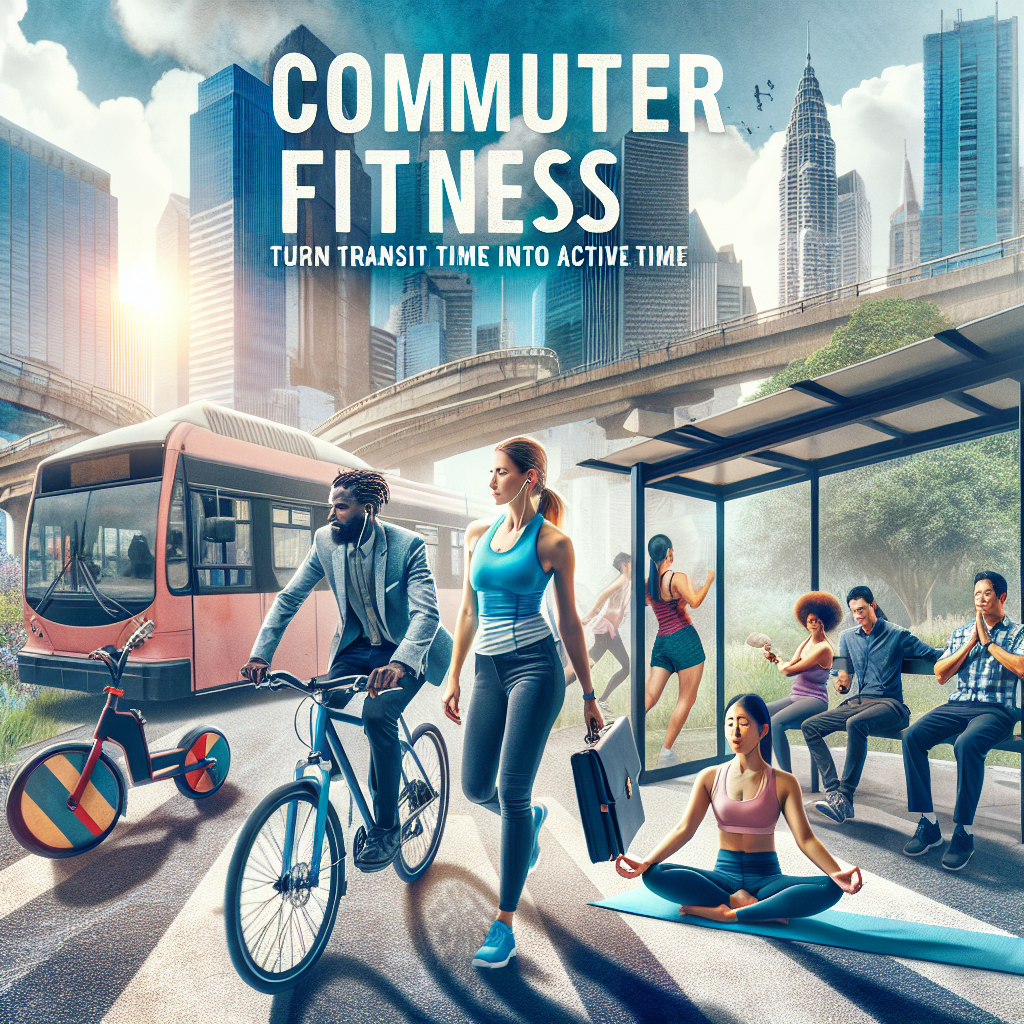
Make the minutes you already spend getting from A to B count toward better health, energy, and focus—without adding hours to your day.
Why Commuter Fitness Works
- Consistency: Commutes happen most days—perfect for habit-building.
- Time-neutral: Piggyback activity onto time you’re already spending.
- Energy boost: Movement before work improves alertness and mood.
- Cost and carbon savings: Swap short drives for steps or pedals when possible.
Note: If you have medical conditions, mobility limitations, or are new to exercise, consult a healthcare professional for personalized guidance.
Safety First
- Never perform exercises while operating a vehicle. Keep full attention on driving or cycling in traffic.
- Be aware of surroundings on platforms, stairs, and sidewalks. Avoid blocking doors and escalators; hold handrails on stairs.
- Use lights, reflective gear, and obey traffic laws. Keep volume low or use open-ear audio when near traffic.
- Choose well-lit routes; consider a buddy, location sharing, or personal alarm if commuting in low-light hours.
Getting Started in 10 Minutes
- Leave 10 minutes earlier than usual.
- Walk the first or last leg briskly (about 100–120 steps per minute).
- Add 1–2 flights of stairs instead of elevators/escalators.
- Do a 2-minute mobility routine on arrival: neck rolls, shoulder circles, hip openers, calf stretch.
Anchor the habit: Tie your active segment to a fixed cue (e.g., “When I tap my transit card, I take the stairs twice before the platform.”)
Strategies by Commute Mode
Walking-First Commute
- Get off 1–2 stops early or park farther away. Aim for 10–20 brisk minutes.
- Cadence target: 100–120 steps/min (you should be slightly breathless but able to talk).
- Stairs and hills: Add short climbs for strength and cardio.
- Load smart: Use a backpack with both straps; keep total weight ≤ 10% of body weight for comfort.
Cycling or E‑Biking
- Start with 1–3 days per week; combine with transit (bike to station) if distance is long.
- Intensity: Most days easy–moderate (RPE 3–6/10); add 2–4 short 20–30s harder efforts on safe, straight, low-traffic segments.
- Gear: Helmet, lights, reflective elements, bell, fenders, lock. Consider panniers to protect your back and posture.
- Route: Favor protected lanes, parks, or side streets. Practice the route on a low-traffic day first.
Public Transit
- Stairs over escalators when uncrowded. Do 2–4 flights at a comfortable pace.
- While waiting: Balance on one leg (lightly hold a railing), heel/toe raises, gentle hip circles.
- On board (standing): Soft knees, engage core, maintain tall posture; small calf raises when stable.
- On board (seated): Glute squeezes 3×20, seated posture resets, 1–2 minutes of diaphragmatic breathing (4–6 second inhales, 6–8 second exhales).
Driving and Carpool
- Pre-drive: 2–3 minutes of dynamic moves (ankle rocks, hip circles, thoracic rotations).
- Park a bit farther: Add a 5–10 minute brisk walk into the building.
- At fuel/charge stops: 2–5 minutes of mobility—calf stretch, hip flexor stretch, shoulder openers.
- Seated posture: Hips back, neutral spine, head over shoulders; adjust mirrors to encourage upright posture.
Micro-Workouts You Can Sprinkle In
- Stairs: 1–3 minutes of steady stair climbing; descend slowly and safely.
- Walk intervals: Alternate 1 minute brisk, 1 minute easy for 10–20 minutes.
- Mobility: 5–10 reps each—neck rotations, shoulder circles, spine flex/extend, hip openers, calf raises.
- Breathwork reset: 6 deep breaths, nasal in through belly, slow mouth or nasal out.
- Isometrics (stationary, safe space): Wall sit 20–40s, plank variations at a bench, gentle static calf stretch.
Accessible Options and Low-Impact Alternatives
- Wheelchair users: Try propulsion intervals (20–30s moderate, 40–60s easy) on smooth, safe surfaces; wear pushrim gloves to protect hands.
- Resistance bands: Seated rows, external rotations, and pull-aparts while waiting (mind spacing and safety).
- Elevator strategy: Add a 2–4 minute push or roll around the block before entering the station/office.
- Shoulder care: 1–2 sets of 10–15 reps of rotator cuff and scapular exercises to maintain joint health.
Gear and Logistics
- Footwear: Comfortable, grippy shoes; keep office shoes at your desk.
- Weather kit: Packable rain jacket, small umbrella, hat, gloves, sunscreen, spare socks.
- Visibility: Front/rear lights for bikes, reflective elements for clothing/bags.
- Carry system: Backpack with sternum strap or panniers; keep loads organized and light.
- Hygiene: Travel deodorant, wipes, quick-dry towel, hair comb; consider locker storage.
- Repair/backup: Spare tube, mini pump/CO₂, tire levers, or transit fallback plan.
Weather and Seasonal Adjustments
- Heat: Go earlier, seek shade, easy pace; hydrate; light, breathable layers.
- Cold: Layer (base, insulation, shell), cover extremities; warm-up indoors 2–3 minutes.
- Wet: Fenders for bikes, water-resistant shoes/jacket; mind slippery surfaces.
- Dark: High-visibility clothing; lights and reflectors; choose well-lit routes.
Time Management and Habit Design
- Pack the night before: Clothes, lunch, gear staged by the door.
- Set cues: Calendar reminders, sticky notes on your bag, or a habit app.
- Start small: Add 5–10 active minutes per commute and build gradually.
- Stack habits: Pair your active segment with a podcast or playlist you only play while moving.
Track What Matters
- Active minutes per day (goal: 20–30+ most days).
- Steps (goal: tailor to you; 7,000–10,000 is common, but progress > perfection).
- Stair flights per week.
- Rate of perceived exertion (RPE) and mood/energy logs.
SMART goal example: “For the next 4 weeks, I will walk 10 minutes to the station and take 2 flights of stairs, at least 4 days/week.”
Sample Weekly Plans
Beginner (Walking + Transit, ~100–150 active minutes)
- Mon: 10-min brisk walk to transit + 2 flights stairs; 5-min walk from stop.
- Tue: Same as Mon; add 1-minute breathwork on board.
- Wed: Rest or gentle mobility 5 minutes before/after work.
- Thu: 15-min total brisk walking split between start/end of commute.
- Fri: 10–20-min “get off early” walk; posture reset on arrival.
Intermediate (Bike/Walk Mix, ~150–220 active minutes)
- Mon: Bike to station (easy, 15–20 min), stairs x 2.
- Tue: Walk intervals 15–20 min (1 min brisk / 1 min easy), breathwork on board.
- Wed: Bike both ways (moderate), 2–3 short 20s harder efforts in safe segments.
- Thu: Active recovery: light walk + mobility 5 min.
- Fri: Choose stairs over escalators; 10–15 min extra walk after work.
Driver Adaptation (No exercises while driving)
- Daily: Pre-drive 2–3 min mobility. Park farther to add 5–10 min walk.
- 2–3 days/week: 5-min mobility at arrival (calves, hip flexors, thoracic spine).
Desk-to-Door Routine (2–4 minutes)
- Before leaving: 10 arm circles each way, 10 sit-to-stands, 10 calf raises.
- On arrival: 20–30s doorway chest stretch, 20–30s hip flexor stretch each side, 6 slow breaths.
Make It Workplace- and School-Friendly
- Store spare clothes and shoes on site; keep a small hygiene kit.
- Ask about lockers, bike cages, showers, or reimbursement for active commuting.
- Coordinate with colleagues for walking meetings after arrival.
Common Barriers and Solutions
- Weather: Have a “Plan B” indoor route (mall, covered walkway) or a short home circuit.
- Heavy bags: Use a backpack with chest strap or panniers; leave nonessentials at work.
- Running late: Do a fast 3-minute mobility and 1 flight of stairs—something is better than nothing.
- Long commutes: Combine modes (drive to a park-and-walk zone or bike to transit).
- Remote days: Create a “fake commute” walk or ride before starting work.
Quick FAQ
Is a short commute enough?
Yes. Even 5–10 minutes at each end adds up. Focus on consistency, then add stairs or intensity as able.
What if I sweat?
Go at an easy–moderate pace, wear breathable layers, and freshen up on arrival. Save harder efforts for the ride home if needed.
Can I use headphones?
In traffic or crowded areas, keep volume low or use open-ear audio. Prioritize situational awareness.