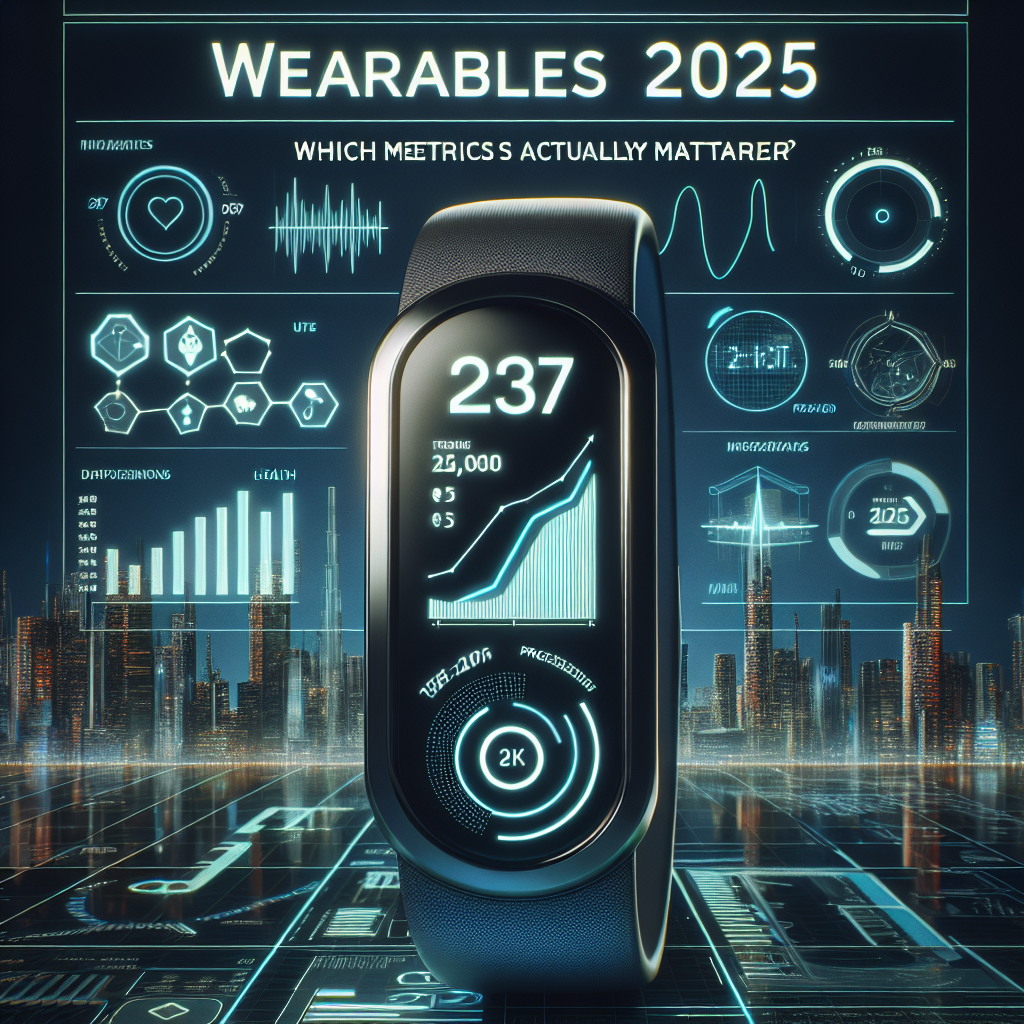
A practical guide to the numbers worth watching—and how to turn them into better sleep, training, and day‑to‑day decisions.
Start with this principle: baseline over bragging rights
In 2025, wearables can surface hundreds of numbers. Most are less useful than they look. The metrics that matter are the ones that:
- Track your personal baseline and highlight meaningful deviations
- Connect to clear actions you can take today or this week
- Have reasonable evidence of accuracy for the way you’ll use them
Tip: Trends beat single numbers. A small, persistent change from your normal is often more informative than a “score.”
The essential metrics (and how to use them)
Resting Heart Rate (RHR)
What it tells you: A simple proxy for cardiovascular fitness and recovery. Lower over months can indicate improved fitness; higher than your usual for a few days can signal fatigue, stress, or illness.
- How to use: Track the same daily window (e.g., overnight average). If RHR is elevated versus your baseline, ease training and prioritize sleep and hydration.
- Cautions: Medications, caffeine, alcohol, and heat can shift RHR. Compare only to your own baseline.
Heart Rate Variability (HRV)
What it tells you: Beat‑to‑beat variability reflecting autonomic balance. Higher relative to your own norm often correlates with better recovery capacity; sustained drops can reflect stress load.
- How to use: Look at multi‑day trends. Pair low HRV with elevated RHR/temperature deviation to consider a lighter day.
- Cautions: HRV is highly individual and method‑dependent. Time of measurement and sensor type matter; compare like with like.
Sleep: duration, efficiency, and timing
What it tells you: Whether you’re getting enough sleep, how consolidated it is, and whether your schedule is consistent—all strongly linked to daytime performance.
- How to use: Aim for consistent sleep/wake times and enough total sleep time for how you feel and function. Use bedtime and wake variability as a simple north star.
- Cautions: Stage labels (REM/Deep) are estimates and less reliable than duration, timing, and regularity.
Body temperature deviation (relative to your baseline)
What it tells you: Small nightly shifts can precede illness, reflect menstrual cycle phases, or indicate recovery status.
- How to use: Watch for sustained deviations from your typical pattern. Combine with RHR/HRV for context.
- Cautions: Room temperature, bedding, alcohol, and timing can influence readings. Absolute values are less important than your personal pattern.
Respiratory rate (primarily during sleep)
What it tells you: Breaths per minute during rest should be relatively stable for an individual. Sustained changes may reflect altitude, illness, or other stressors.
- How to use: Track trends rather than daily noise. Pair with temperature and RHR deviations.
- Cautions: Motion artifact and sensor placement can affect accuracy; asleep values are most reliable.
Active minutes and heart rate zones
What it tells you: How much moderate and vigorous activity you accumulate—strongly associated with health outcomes.
- How to use: Target weekly totals that mix easy movement and some vigorous effort, adjusted to your training level.
- Cautions: Wrist optical HR is less accurate during high‑motion or strength work; a chest strap can improve workout HR.
VO2max (estimate) and fitness trends
What it tells you: An estimated ceiling for aerobic performance, most useful as a personal trend.
- How to use: Calibrate with steady outdoor runs/rides if your device supports it. Use the trend to assess training effectiveness.
- Cautions: Algorithm and activity dependent; treat as directional, not a lab value.
Training load and recovery/readiness scores
What it tells you: Composite views of recent strain versus recovery. Helpful for planning hard/easy days.
- How to use: Use scores to adjust intensity, not to skip activity entirely. Cross‑check with subjective feel.
- Cautions: Each brand’s score is different. Understand the inputs (HRV, sleep, strain) and avoid over‑relying on a single number.
ECG spot checks and irregular rhythm notifications
What it tells you: Many watches provide single‑lead ECG spot checks and passive irregular rhythm alerts designed to help detect possible atrial fibrillation (AFib).
- How to use: Use as a screening aid. Share concerning recordings with a clinician.
- Cautions: Not continuous clinical monitoring; false positives and negatives occur. Chest pain, fainting, or sustained palpitations warrant medical attention regardless of the wearable.
SpO₂ (pulse oximetry)
What it tells you: Oxygen saturation estimates at rest. Useful at altitude or if advised by a clinician.
- How to use: Look at resting values when still; trends matter more than single readings.
- Cautions: Consumer SpO₂ can be variable and is less informative for healthy people at sea level. Skin perfusion, skin tone, and motion affect accuracy.
Cuffless blood pressure and blood glucose: where things stand
- Blood pressure: Some devices offer cuffless estimates that typically require regular calibration with a traditional cuff. Treat as supplemental; follow clinical devices for medical decisions.
- Glucose: Noninvasive glucose from watches/rings remains an aspirational technology. Continuous glucose monitors exist but are invasive; their use for people without diabetes should be guided carefully.
Metrics that matter less (or need context)
- Step counts: A good nudge for general movement, but the “10,000 steps” target is arbitrary. Focus on total active minutes and sitting breaks.
- Calories burned: Estimates can be off by meaningful margins. Better to track behaviors (time in zones, training volume) than chase calorie numbers.
- Sleep stages: Use with caution. Duration, timing, and consistency are more reliable.
- One‑off HRV numbers: A single low or high reading isn’t a verdict—watch multi‑day trends.
- Generic “stress scores”: Useful as a prompt to take a break, but they are proxies. Pair with how you actually feel.
Accuracy basics: getting better data from the device you already own
- Fit and placement: Snug, not tight; one finger above the wrist bone for watches. Rings should not spin. Cold hands and tattoos can reduce PPG accuracy.
- Sensor choice for workouts: Use a chest strap for intervals/HIIT and strength training if precise HR is important.
- Consistency: Measure at the same times and in similar conditions (e.g., overnight HRV/RHR).
- Calibration and profiles: Complete device calibration runs/rides; keep height/weight/age accurate; update firmware.
- Algorithm differences: Each brand processes signals differently. Don’t compare across platforms; compare to your own history.
Choose metrics by goal
General wellness
- Priority: Sleep duration/regularity, active minutes, RHR trend
- Extras: HRV trend, temperature deviation
- Avoid over‑focusing on: Calories, sleep stages
Endurance training
- Priority: Time in HR zones, training load, VO2max trend
- Recovery: HRV/RHR/temperature, subjective feel
- Hardware: Chest strap for key sessions; power meter for cycling if possible
Strength & mixed fitness
- Priority: Session RPE, volume (sets × reps × load), weekly consistency
- Use HR for conditioning blocks; don’t over‑interpret HR during lifts
- Recovery: Sleep regularity and HRV trend
Women’s health
- Priority: Cycle tracking, temp deviation, symptoms
- Context: Expect HRV/RHR to vary with cycle phases
Travel/shift work
- Priority: Sleep timing regularity, light exposure timing
- Use temp/RHR/HRV to identify jet lag load and titrate activity
Privacy and data stewardship
- Ownership and export: Can you export raw data? Is there a clear deletion path?
- Sharing: Wellness data may not be protected like medical records in all jurisdictions. Review what’s shared with third parties.
- Controls: Opt into only the insights you want; disable continuous location if not needed.
What’s new and what’s not in 2025
- Better sensors, same principles: Multi‑wavelength optical sensors and improved skin temperature modules are enhancing stability, especially overnight.
- Cuffless blood pressure: More devices include it, but many still require regular cuff calibration; treat as supportive, not diagnostic.
- Arrhythmia features: ECG spot checks and passive AFib notifications are more common; they remain screening tools.
- Noninvasive glucose: Still not clinically established in mainstream wearables. Be cautious of marketing claims.
- Hydration and sweat metrics: Useful for context in specific sports settings, but general consumer accuracy varies.
Turning numbers into action: simple playbook
- If RHR up + HRV down + temp up versus baseline: back off intensity, prioritize sleep, hydrate, and reassess tomorrow.
- If sleep time fell this week: protect bedtime, reduce late caffeine/alcohol, get morning light; don’t chase stages.
- If VO2max trend plateaus: add easy volume first; sprinkle short intervals sparingly.
- If stress score is high but you feel fine: take a short walk or breathing break; use it as a cue, not a command.
Reminder: Wearables inform decisions; they don’t make them. Your subjective feel remains a critical data point.
Buying checklist
- Does it accurately measure the 3–5 metrics you’ll actually use?
- Can you wear it comfortably every day and during your sport?
- Battery life fits your routine; charging is convenient
- Data export, app quality, and ecosystem fit your workflow
- Privacy policy is clear; features you need are not locked behind expensive subscriptions
Bottom line
In 2025, the most valuable wearable metrics are still the simplest: how you sleep, how you move, how your heart and breathing change relative to your normal, and how well you’re recovering from what you do. Focus on trends, prioritize actions you can take this week, and choose devices that earn your trust with clarity and consistency—then let the rest of the numbers fade into the background.
This article is for general information and is not medical advice. For diagnosis or treatment questions, consult a qualified clinician.