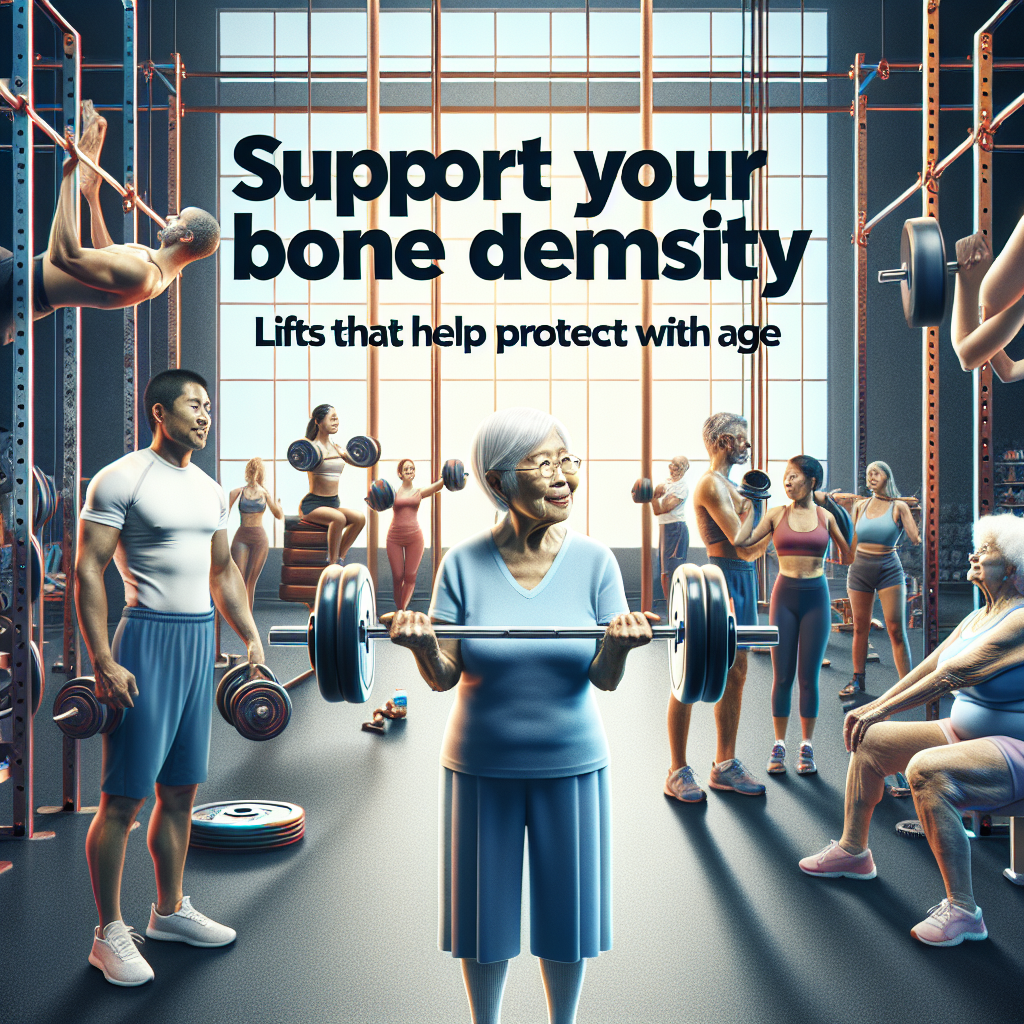
Strong bones are built by regular, targeted stress. The right lifts and impact drills signal your body to maintain or even increase bone mineral density, improving resilience as you age.
Why bone density matters
After about age 30, bone mass naturally declines. Lower bone density increases fracture risk, especially in the hip, spine, and wrist. The good news: bones adapt to the loads you place on them. Smart resistance and impact training improves bone strength, muscle mass, balance, and reaction time—key defenses against falls and fractures.
How lifting strengthens bones
- Mechanical loading from muscles and ground reaction forces stimulates osteoblasts (bone-building cells).
- Higher strain magnitude and rate (heavier loads, purposeful tempo, controlled impact) drive stronger bone responses.
- Compound lifts load multiple regions: hips, spine, and wrists—all common fracture sites.
- Progressive overload (gradually increasing challenge) keeps the bone-adaptation signal active.
Lifts that help protect with age
Choose versions that fit your experience and comfort. Use a load that feels challenging while maintaining solid form.
1) Squat pattern
Targets hips, thighs, and spine; excellent for hip and spine bone density.
- Beginner: bodyweight box squat, goblet squat (dumbbell/kettlebell).
- Intermediate: barbell back or front squat; safety-bar squat; leg press if needed.
- Cues: feet about shoulder-width; sit back and down; knees track over mid-foot; brace torso; stand tall.
2) Hip hinge (deadlift family)
Loads the posterior chain (glutes/hamstrings) and spine; potent for bone along the entire posterior kinetic chain.
- Beginner: hip hinge with dowel, kettlebell deadlift from elevated surface, trap-bar deadlift.
- Intermediate: conventional or sumo deadlift; Romanian deadlift for controlled loading.
- Cues: hinge at hips, keep spine neutral, bar close to shins, push the floor away.
3) Step-ups or lunges
Unilateral loading challenges hips, knees, ankles, and balance.
- Beginner: bodyweight step-ups to a stable box; split squat holding support.
- Progression: add dumbbells, then higher step or walking lunges.
- Cues: full-foot contact, knee tracks over toes, control down.
4) Overhead press
Loads shoulders, arms, upper back, and transmits force through the spine and wrists.
- Beginner: seated dumbbell press; landmine press.
- Intermediate: standing barbell or dumbbell press.
- Cues: ribs down, glutes tight, press up and slightly back, control the return.
5) Row or pull-down
Strengthens upper back and the spine’s posterior muscles; promotes upright posture.
- Beginner: chest-supported row, cable row, lat pull-down.
- Progression: one-arm dumbbell row; inverted row; pull-ups (assisted as needed).
- Cues: lead with elbows, squeeze shoulder blades back and down.
6) Bench press or push-up
Loads the upper body and wrists; easy to progress in small steps.
- Beginner: wall or incline push-ups; machine chest press.
- Progression: floor push-ups; dumbbell or barbell bench press.
- Cues: wrists straight, shoulder blades set, control both directions.
7) Loaded carries
Farmer’s carry or suitcase carry challenges grip, hips, and trunk stability while loading the skeleton during gait.
- Beginner: light dumbbells, shorter distances.
- Progression: heavier loads, longer walks, uneven loads (suitcase carry).
- Cues: tall posture, relaxed breathing, steady steps.
8) Back extensor and core endurance
Stronger spinal extensors support vertebral health and posture.
- Options: bird-dog, prone back extension (small range), hip hinge isometrics, side plank.
- Cues: neutral spine, slow controlled movements, no forced end-range spinal flexion.
Smart machine alternatives
When free weights feel unstable, machines still provide bone-loading stimulus:
- Leg press, chest press, seated row, lat pull-down, overhead press machine, cable column.
Impact and balance work
Impact adds a powerful bone signal; balance reduces falls.
- Low-to-moderate impact ideas: heel drops, fast step-ups, low box jumps or hop-and-stick, brisk stair climbing, light jump rope.
- Balance drills: single-leg stands, tandem walk, heel-to-toe rocks, perturbation training, Tai Chi or yoga (stable, non-flexion-heavy styles).
Start with very small volumes and surfaces you trust. If you have diagnosed osteoporosis or prior fragility fracture, prioritize medical guidance before adding impact.
How to program it
- Frequency: 2–3 non-consecutive days per week of total-body resistance training.
- Intensity for bone: work up to moderately heavy sets. A common target is 70–85% of 1-rep max (about a weight you can lift for 5–10 controlled reps), with 2–4 sets per exercise.
- Reps/sets: 3–5 sets of 5–10 reps for major lifts; 2–3 sets of 8–12 for accessories and carries.
- Rest: 2–3 minutes between heavy sets; 60–90 seconds for lighter work.
- Progression: when you hit the top of your rep range with good form, increase load by 2–5% next session.
- Impact: begin with 20–40 low contacts per session, 2–3 times per week, progressing cautiously as tolerated.
- Tempo: controlled lowering (2–3 seconds) increases bone-relevant strain without jerking.
Safety and form essentials
- Warm up: 5–10 minutes of light cardio, dynamic mobility, and 2–3 ramp-up sets for the first big lift.
- Spine position: keep a neutral spine; avoid loaded end-range flexion and twisting, especially if bone density is low.
- Bracing and breath: inhale, brace gently, move; exhale through the sticking point. If you have uncontrolled blood pressure, avoid prolonged Valsalva maneuvers.
- Pain rule: joint pain or sharp back pain is a stop signal; muscle effort and mild soreness are normal.
- Environment: stable shoes, clear floor, sturdy benches, and spotters or safety pins when lifting heavy.
- Medical: if you have osteoporosis, a recent fracture, cancer treatment, glucocorticoid use, or cardiovascular conditions, get individualized clearance and guidance.
Modifications for osteopenia/osteoporosis
- Emphasize extension: back extensor endurance, rows, and hip hinges with careful technique.
- Avoid: deep loaded spinal flexion (e.g., sit-ups with weight), explosive twisting under load, and flexion-compression combinations.
- Choose stable variations: goblet squats to a box, trap-bar deadlifts from blocks, machines for pressing and rowing.
- Progress slower: smaller load jumps, more practice sets, and conservative impact (or none initially).
- Posture practice: daily tall-standing drills and hip-hinge patterning.
Nutrition and lifestyle for bone strength
- Protein: about 1.0–1.2 g per kg body weight daily (more if advised), distributed across meals.
- Calcium: typically 1,000–1,200 mg/day from food plus supplements if needed.
- Vitamin D: often 800–1,000 IU/day; confirm with a blood test and clinician guidance.
- Other helpers: adequate magnesium, potassium, and overall energy intake.
- Habits: don’t smoke; limit alcohol; get daily daylight/activity; prioritize sleep.
Sample weekly plans
Two-day total-body plan
Day A
- Squat pattern: goblet squat or safety-bar squat — 4 sets of 6–8
- Row: chest-supported row — 3 sets of 8–10
- Hip hinge: kettlebell or trap-bar deadlift — 3 sets of 5–6
- Overhead press: seated dumbbell press — 3 sets of 8
- Core/back extensors: bird-dog — 3 sets of 6–8 per side
- Carry: farmer’s carry — 3 x 30–40 meters
- Optional impact: 20–30 heel drops or low step hops
Day B
- Hip hinge: Romanian deadlift — 4 sets of 6–8
- Pull-down or pull-up (assisted as needed) — 3 sets of 6–10
- Step-up or split squat — 3 sets of 8 per side
- Bench press or push-ups — 3 sets of 6–10
- Back extension (short range) or side plank — 3 sets
- Suitcase carry — 3 x 20–30 meters per side
- Optional balance: single-leg stance — 3 x 20–30 seconds per side
Three-day split (shorter sessions)
- Day 1: Squat + press + carry + balance
- Day 2: Hinge + row + back extensors + impact
- Day 3: Lunge/step-up + push + core + light carry
Progression: when you complete all sets at the top of the rep range with good control, add a small amount of weight (2–5%) or an extra rep next time.
Monitoring progress
- Training log: track exercises, loads, reps, and how they felt (effort 1–10).
- Function: note improvements in getting up from chairs, stairs, and carrying groceries.
- Bone density: discuss DEXA scan intervals with your clinician (commonly every 1–2 years if at risk).
- Red flags: new or worsening back pain, height loss, or pain after minor bumps—seek evaluation.
Trusted resources
- Bone Health & Osteoporosis Foundation: https://www.bonehealthandosteoporosis.org
- American College of Sports Medicine (ACSM) exercise guidelines: https://www.acsm.org
- National Osteoporosis Foundation patient resources: https://www.nof.org
- NHS (UK) bone health overview: https://www.nhs.uk
This article is educational and not a substitute for medical advice. If you have osteoporosis, recent fractures, or medical conditions, consult a qualified professional for individualized programming.