
Most running injuries don’t appear overnight—they whisper before they shout. Spotting early warning signs lets you adjust training, treat small issues, and stay consistent.
Why early signs matter
Most running injuries develop from repeated, sub-threshold stress that outpaces your body’s ability to recover. Catching symptoms early helps you:
- Prevent tissue overload from becoming a full-blown injury
- Modify training without losing fitness
- Reduce the need for imaging, medication, or long layoffs
Who’s at higher risk
- Rapid training changes: sudden mileage, speed, hills, or surface changes
- History of prior injury in the last 12 months
- Low energy availability/RED-S, menstrual disturbances, low bone density
- Inadequate strength (hips, calves, quads, hamstrings) or poor sleep
- Worn shoes or abrupt footwear changes (stack height, heel-to-toe drop)
- High life stress or inconsistent recovery
Early warning signs you shouldn’t ignore
- Pain that localizes to bone or a pinpoint spot, worsens with impact
- Sharp or stabbing pain that alters your stride
- Swelling, warmth, or redness over a joint or tendon
- Morning stiffness that lasts >30 minutes or limping on first steps
- Tendon “warm-up” pain that improves during a run but returns after
- New asymmetry: one-sided tightness, weakness, foot slap, or limp
- Decreasing pace at the same effort or unusual heart rate drift
- Numbness, tingling, or burning sensations
- Night pain or pain at rest (especially bone pain)
- Persistent tightness that doesn’t respond to usual recovery
Common injuries and their early clues
Stress fracture or bone stress injury
- Focal, tender “point” pain on bone (tibia, foot metatarsals, femoral neck)
- Pain increases with impact, may persist after runs or at night
- Possible mild swelling; hopping on one leg reproduces sharp pain
Medial tibial stress syndrome (shin splints)
- Diffuse, lengthwise tenderness along inner shin
- Worse at start of run, may ease as you warm up; returns afterward
- Different from stress fracture: pain is more spread out, not a single point
Patellofemoral pain (runner’s knee)
- Around or behind kneecap, worse on stairs, hills, or after sitting
- Crepitus/grinding sensation; pain with deep knee bend
Iliotibial band syndrome
- Sharp pain on outer knee, often after a set time or distance
- Worse downhill; tenderness over lateral femoral epicondyle
Achilles tendinopathy
- Morning stiffness, first-step pain, thickening or tenderness of tendon
- Pain decreases during run, returns later or next morning
Plantar fasciitis/plantar heel pain
- First-step heel pain in the morning or after sitting
- Tenderness at the medial heel; worse with barefoot on hard floors
Proximal hamstring tendinopathy
- Deep buttock pain near sit bone, worse with uphill or speed
- Pain with prolonged sitting or hinging
Gluteus medius/minimus tendinopathy (hip)
- Outer hip pain, sore to lie on at night
- Worse with single-leg stance, crossing legs, or long walks
Ankle sprain (often subtle)
- Localized swelling and tenderness around ankle ligaments
- Feeling of instability or “giving way” on uneven ground
What to do when you notice signs
- Reduce load: cut volume 30–50%, avoid speed/hills/cambered surfaces for 1–2 weeks.
- Swap to low-impact cross-training (cycling, pool, elliptical) if pain-free.
- Use pain as a guide: keep run pain ≤2/10 and no worse the next morning.
- Modify terrain and footwear: flatter routes; consider a temporary higher stack/heel drop for Achilles/plantar issues.
- Begin targeted strengthening (see Prevention) focusing on calves, hips, and quads.
- Symptom relief: compression and elevation for swelling; ice can help short-term pain. Be cautious with routine NSAID use, especially with suspected bone stress injury.
PEACE & LOVE approach:
- Protection and Elevation early on
- Avoid aggressive anti-inflammatories if tissue healing is a concern (especially bone/tendon)
- Compression as needed
- Education: load management and expectations
- Load: reintroduce gradually
- Optimism: most running injuries improve with conservative care
- Vascularization: pain-free cardio to promote blood flow
- Exercise: progressive strength and mobility
When to stop running and seek care
- Pain >3/10 during the run or lasting >24–48 hours after
- Limping, altered gait, or inability to hop on the painful leg
- Night pain, rest pain, or focal bony tenderness (possible stress injury)
- Rapid swelling, locking, catching, or feelings of instability
- Neurologic symptoms: numbness, tingling, weakness
- No improvement after 2–3 weeks of load reduction and basic care
A licensed physical therapist or sports medicine clinician can assess mechanics, training load, and prescribe targeted rehab. Imaging (X-ray, ultrasound, MRI) is usually reserved for red flags or symptoms persisting beyond 6–8 weeks.
Return-to-run guidelines
- Progress when walking is pain-free and daily activities don’t flare symptoms.
- Use a walk–run progression: e.g., 1:1 minute intervals for 20–30 minutes, increasing run time every other session as tolerated.
- Rules of thumb: pain during ≤2/10, no limp, and no next-day increase in pain or stiffness lasting >24 hours.
- Increase volume by about 5–10% weekly; add speed or hills only after 2–3 symptom-stable weeks.
- Alternate running days early on to allow tissue recovery.
Prevention toolkit
Form and cadence
- Increase cadence 5–10% if you overstride or have impact-related pain.
- Land with your foot under your center of mass; keep posture tall and relaxed.
- Introduce downhills and speed gradually; both raise load.
Footwear and surfaces
- Rotate 2 pairs if you run >3x/week; replace at ~300–500 miles (varies by build and surface).
- Transition shoe type (stack/heel drop) over 2–4 weeks.
- Mix surfaces; avoid abrupt switches to hard or highly cambered routes.
Strength and mobility essentials (2–3x/week)
- Calf complex: straight-knee and bent-knee calf raises (progress to heavy slow resistance)
- Quads: split squats or step-downs
- Hips: side planks, hip abduction, monster walks
- Hamstrings: RDLs and Nordic or slider curls (progress gradually)
- Feet: short-foot drills, toe yoga, big-toe extension mobility
- Ankles/hips: mobility as needed for restrictions that alter gait
Warm-up and recovery
- 5–10 minutes easy jog or brisk walk, plus dynamic drills (leg swings, skips, strides).
- Post-run: light mobility and gentle calf/hip stretches if tight.
- Prioritize sleep, fueling, and hydration.
Fueling, bones, and hormones
- Meet energy needs; chronic deficits increase injury risk.
- Aim for adequate protein (about 1.6–2.2 g/kg/day for active adults) and calcium/vitamin D.
- Monitor menstrual regularity or signs of low testosterone/energy in men; consult a clinician if concerned.
FAQ
How do I tell soreness from injury?
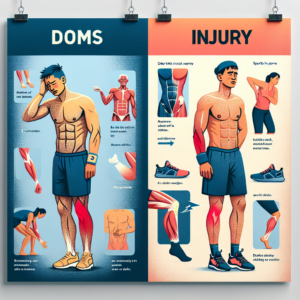
Normal DOMS peaks 24–48 hours after a new or hard workout, is diffuse, and eases with easy movement. Injury pain is often sharp, focal, worsens with impact, and may persist or appear at night.
Should I keep running through mild pain?
If pain stays ≤2/10, doesn’t alter form, and doesn’t worsen the next day, a reduced, cautious return is reasonable. Otherwise, stop and modify.
Do I need imaging?
Not usually. Consider imaging for red flags (night/rest pain, focal bony tenderness, significant swelling/instability) or if no improvement after 6–8 weeks of appropriate care.
Can ice or NSAIDs fix the problem?
Ice can reduce pain temporarily. NSAIDs may help short-term pain and swelling but can interfere with certain healing processes; avoid routine use, especially with suspected bone stress injury. Focus on load management and strengthening.