
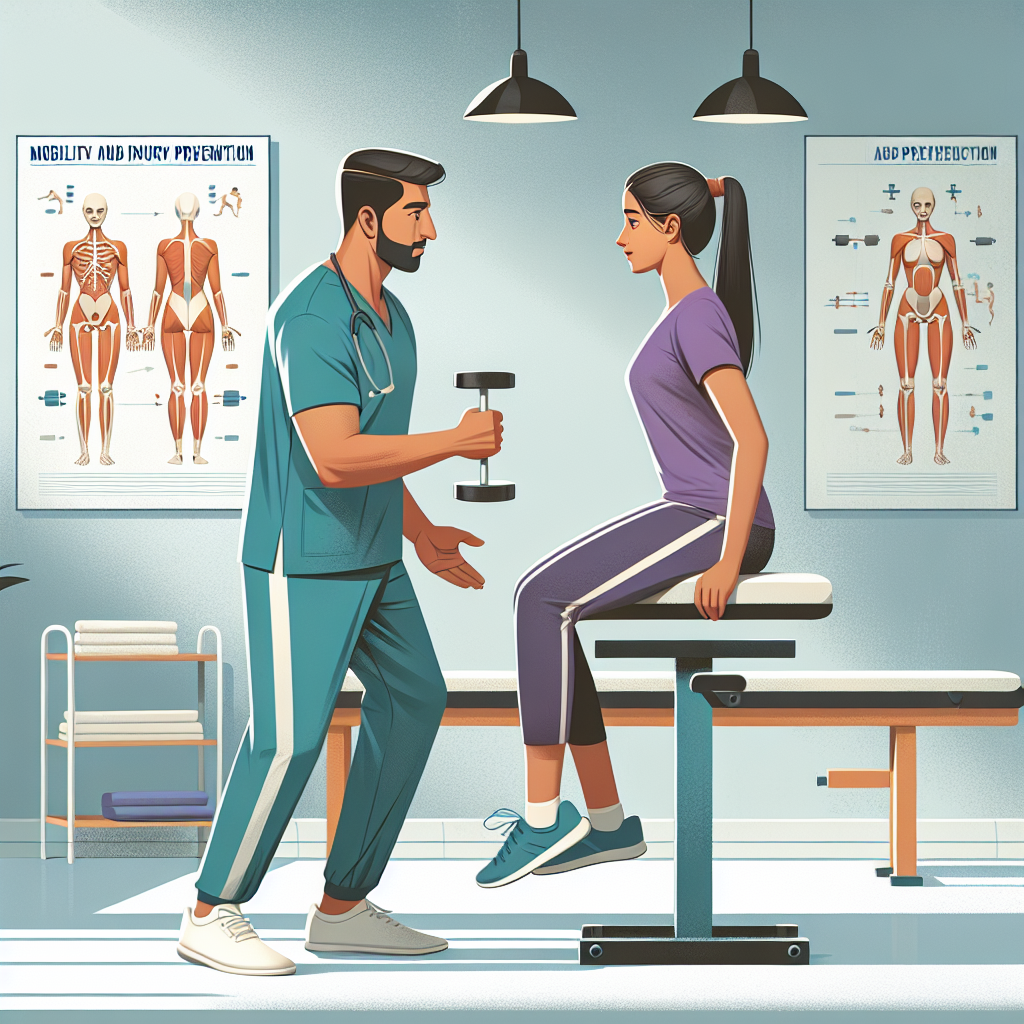
Mobility is more than stretching. It’s the blend of range of motion, control, and strength that lets you move efficiently and resist injury in sport and daily life.
What is mobility?
Mobility is your usable range of motion under control. It combines flexibility (how far a joint can move passively) with stability and strength (how well you can actively move and load that joint).
- Flexibility: Passive range, e.g., a therapist moves your hip.
- Mobility: Active range you can control, e.g., raising your leg yourself.
- Motor control: Coordination and timing that keep joints centered and tissues safe.
Why mobility matters for injury prevention
- Distributes load: Adequate joint motion spreads stress across tissues instead of overloading one spot.
- Improves movement efficiency: Better positions require less compensatory motion.
- Enhances readiness: Dynamic mobility primes tendons, muscles, and the nervous system.
- Supports technique: Strength skills (squats, sprints, jumps) are safer with accessible ranges.
- Buffers fatigue: Good control helps maintain form when tired.
Quick self-checks
Use these simple screens to spot priorities. Mild asymmetries are common; focus on meaningful limitations tied to your activities.
- Overhead reach: Stand back to wall; can you fully raise arms overhead without rib flare or low-back arch?
- Deep squat: Feet shoulder-width. Heels stay down, knees track toes, torso upright. Note sticking points.
- Hip rotation: Sit tall, knees 90°. Rotate lower leg in/out. Compare sides; look for pain or big side-to-side gaps.
- Ankle dorsiflexion: Knee-to-wall test. Knee touches wall without heel lift 8–12 cm away? Limited if not.
- Thoracic rotation: Quadruped thread-the-needle. Can you rotate symmetrically without lumbar twist?
Training principles that protect you
- Specificity: Mobilize the ranges your sport or job demands.
- Active first: Prioritize active range and control over long static holds before activity.
- Work near end‑range: Strengthen where you’re weakest to make new range usable.
- Gradual load: Progress volume, intensity, and complexity 5–10% per week.
- Consistency over intensity: Short daily doses beat sporadic marathon sessions.
- Balance mobility with stability and strength: Flexible but weak is as risky as strong but stiff.
- Respect recovery: Tissues adapt between sessions; sleep and nutrition matter.
Mobility techniques that work
- Dynamic mobility drills: Leg swings, world’s greatest stretch, inchworms to prep for movement.
- Controlled Articular Rotations (CARs): Slow, pain‑free joint circles to maintain range and joint health.
- End‑range isometrics: Light contractions at new range to “own” it.
- Eccentric loading: Slow lowering (e.g., calves, hamstrings) to build tissue capacity.
- PNF/contract‑relax: Brief resisted contractions then relax into new range.
- Breathing and ribcage mobility: 360° breathing, open‑book rotations to free thoracic spine.
- Self‑myofascial release: Short bouts (30–90 s) with a roller or ball to reduce tone before active work.
Build a safer warm‑up
Use the RAMP framework: Raise, Activate, Mobilize, Potentiate.
- Raise: 3–5 min light cardio to increase temperature and blood flow.
- Activate: Key muscle groups for the day (glutes, mid‑back, core).
- Mobilize: Dynamic, joint‑specific drills.
- Potentiate: Short, fast, low‑volume sets that resemble the session (e.g., skips, jumps, build‑up sprints).
Programming by goal and population
Desk‑bound and general fitness
- Daily 5–10 min: spine mobility, hip flexors, ankles, scapular control.
- Microbreaks: stand every 30–60 min; 60–90 s of movement variability.
Runners
- Prioritize ankles, hips, and foot strength. Include calf eccentrics and hip rotation drills.
- Pre‑run: dynamic only; save longer static work for after runs or separate sessions.
Strength athletes
- Mobilize positions you load: ankles/hips for squats, thoracic/shoulders for presses.
- End‑range isometrics and light positional breathing improve depth without losing tightness.
Field/court sports
- Hip/knee/ankle control, deceleration and landing mechanics, and progressive plyometrics.
- Include change‑of‑direction drills with good knee tracking and trunk control.
Older adults
- Gentle daily mobility, balance work, and strength through functional ranges.
- Prioritize pain‑free, controlled movements; progress slowly.
Beyond the gym: daily habits
- Move often: Vary positions (sit, stand, walk) instead of chasing perfect posture.
- Load management: Increase training volume gradually; schedule lighter weeks.
- Footwear and surfaces: Match shoes to task; rotate pairs; introduce changes slowly.
- Sleep/nutrition: 7–9 hours sleep; adequate protein and hydration to support tissue repair.
When to pull back or see a pro
- Sharp, worsening, or night pain; numbness/tingling; joint locking or giving way.
- Swelling or significant loss of function after minor activity.
- Pain that doesn’t improve with 1–2 weeks of load modification and gentle mobility.
This article is educational and not a substitute for personalized medical advice. Consult a qualified professional for diagnosis or treatment.
Common myths
- “More flexibility is always better.” Excess range without strength/control can increase injury risk.
- “Static stretching before workouts prevents injuries.” Long static holds can reduce power acutely; use dynamic mobility pre‑workout and save longer holds for after or separate sessions.
- “Pain is gain.” Mobility should be challenging but not sharp or joint‑line painful.
Sample routines
Daily 10‑minute maintenance
- Spinal CARs: 1 minute
- Neck CARs: 3 slow circles each way
- Thoracic open books: 6–8/side
- Hip CARs (standing or quadruped): 5 slow reps/side
- Ankle dorsiflexion rocks: 10/side
- 90/90 hip switches with reach: 8/side
- End‑range isometric calf stretch: 2 x 20–30 s/side (gentle contraction at end‑range)
Pre‑run 8‑minute warm‑up
- Raise: 2–3 min brisk walk or easy jog
- Leg swings front/back and side/side: 10–15/side
- Walking lunges with rotation: 8/side
- Ankle pogo hops: 2 x 20 contacts
- Build‑up strides: 2 x 20–30 m at 70–80% effort
Pre‑lift 10‑minute lower‑body primer
- Bike or row: 3 minutes
- Deep squat pry with breath: 5 x 3 slow breaths
- Hip airplanes (hold onto rack if needed): 5/side
- Ankle knees‑over‑toes rocks: 10/side
- Goblet squat ramp‑up sets: 2–3 x 5 with increasing load
2‑minute desk break
- Neck nods and turns: 5 each
- Shoulder blade slides on wall or air: 8
- Standing hip flexor stretch with glute squeeze: 30 s/side
- Ankle rocks and calf raises: 10
Key takeaways
- Mobility = range + control + strength. Train all three.
- Use dynamic, task‑specific warm‑ups and strengthen end‑ranges.
- Progress gradually and move often throughout the day.
- Address meaningful limits tied to your goals; seek help for pain or red flags.