For athletes, lifters, and anyone training hard who wants to feel better and perform better, faster.
Short answer
- Need to bounce back fast (tournament, back-to-back sessions)? Choose cold water immersion right after: 10–15°C for 5–10 minutes. It reliably reduces soreness and restores power in the next 24–48 hours.
- Building strength and muscle? Avoid routine ice baths immediately post-lift. Use sauna/heat instead, or delay cold by 6–8+ hours or to rest days.
- Endurance block or general wellness? Sauna 2–4 days/week (20–40 minutes total per session, split into rounds) supports relaxation, sleep, and may aid endurance adaptations.
- Want both? Contrast therapy (alternating hot/cold) can further reduce perceived soreness. Finish cold if you need to be alert; finish warm if you want better sleep.
What “recovery” actually means
- Short term: less soreness, restored strength/power/endurance, better sleep and mood.
- Long term: maintaining or enhancing training adaptations (strength, hypertrophy, endurance).
Cold and heat can help the short-term goals. Only heat clearly avoids interference with long-term strength/hypertrophy; cold can blunt these if used immediately after lifting, especially when repeated over weeks.
How ice baths work (cold)
- Vasoconstriction and reduced tissue temperature lower swelling and pain, and can preserve neuromuscular function.
- Dampens inflammatory signaling that contributes to soreness.
- Trade-off: repeated post-lift cold can reduce muscle protein synthesis and satellite cell activity, slightly blunting strength and hypertrophy gains over time.
How saunas work (heat)
- Vasodilation increases blood flow, which may help metabolite clearance and relaxation.
- Heat shock proteins and cellular signaling support endurance adaptations and stress resilience.
- Calming autonomic effects can improve sleep quality and perceived recovery.
Evidence snapshot
- Ice baths (10–15°C, 5–15 min) after games/sprints reduce delayed onset muscle soreness (DOMS) and help recover power within 24–48 hours.
- Post-lift ice baths used chronically can attenuate anabolic signaling and reduce long-term strength and hypertrophy gains compared with passive recovery.
- Sauna post-exercise does not appear to blunt strength gains and may enhance endurance markers (e.g., plasma volume) and relaxation/sleep.
- Contrast therapy often reduces perceived soreness more than either alone; performance benefits are mixed but can be useful when time-crunched.
Protocols you can use
Cold water immersion (CWI)
- Best for: tournament play, congested schedules, heavy eccentric/impact sessions, when next-day performance matters more than adaptation.
- Temperature: 10–15°C (50–59°F). Avoid extremes; colder is not necessary.
- Duration: 5–10 minutes continuous, or 2 × 5 minutes with a short break.
- Timing: Immediately post-session for acute recovery; delay 6–8+ hours (or to rest days) after strength/hypertrophy workouts.
- Frequency: Use strategically. Daily post-lift use over weeks may blunt gains.
Sauna / hot exposure
- Best for: relaxation, sleep, endurance blocks, general well-being, or when avoiding post-lift cold.
- Dry sauna: 80–90°C (176–194°F). Start lower if new to heat.
- Duration: 2–4 rounds of 8–15 minutes (total 20–40 minutes), with cool-off between rounds.
- Timing: Post-exercise or on rest days. Evening sessions can aid sleep—finish warm (not cold) if bedtime is near.
- Hydration: Drink fluids and consider electrolytes; weigh in/out if sessions are long or you’re heat-acclimating.
Contrast therapy (hot/cold)
- Setup: Alternate 2–4 minutes hot (sauna or 38–40°C bath/shower) with 1–3 minutes cold (10–15°C), for 2–4 cycles.
- Finish: Cold if you want alertness and swelling control; warm if you want relaxation and sleep.
- Use when: You want the perceptual relief of heat with the anti-soreness benefit of cold, and time is limited.
Sport- and goal-specific guidance
- Strength/hypertrophy phases: Skip immediate post-lift ice baths. Use sauna 10–20 min instead. If you love cold, do it on rest days or 6–8+ hours after lifting.
- Endurance blocks: Add sauna 2–4×/week after easy/moderate sessions to build heat tolerance and support endurance adaptations. Use CWI sparingly unless racing or during overload weeks with high soreness.
- Team sports/tournaments: CWI right after matches can speed turnaround. Consider light sauna next day for mobility and relaxation.
- Injury management: Early acute injuries often benefit more from cold for pain/swelling. For chronic tightness or tendon issues, heat before movement can help; follow clinician guidance.
If you only want one rule
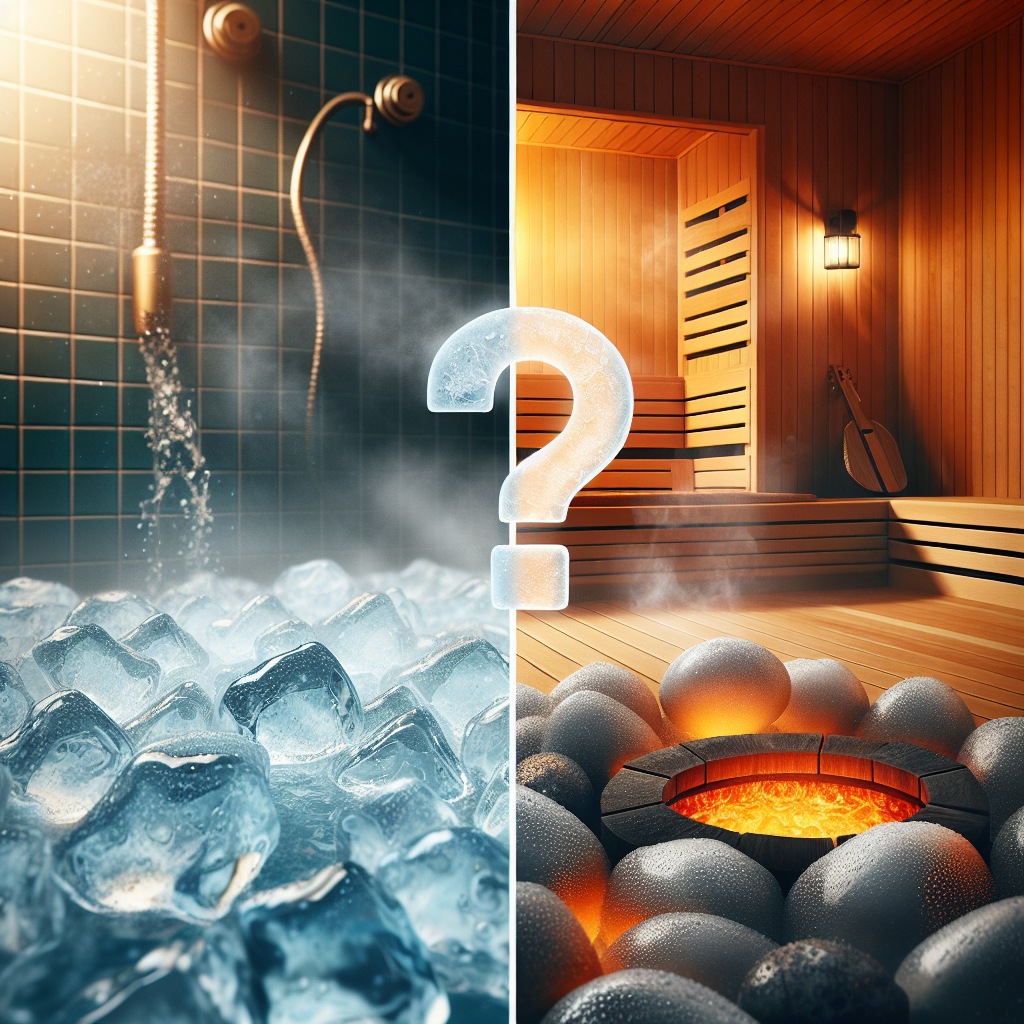
Use ice baths when you must feel and perform better by tomorrow. Use saunas when you want to feel better now and keep your long-term training gains intact.
Safety essentials
Cold
- Avoid if you have uncontrolled cardiovascular disease, severe Raynaud’s, cold urticaria, or open wounds. Consult a clinician if pregnant or with chronic conditions.
- Do not go alone; avoid hyperventilation or breath holds underwater. Limit first exposures to 3–5 minutes; rewarm gradually (dry clothes, movement, warm room).
- Stop if you feel chest pain, confusion, or uncontrolled shivering.
Heat
- Avoid if dehydrated, feverish, acutely ill, or with unstable cardiovascular conditions. Use caution with low blood pressure and certain medications.
- Limit rounds to 8–15 minutes; cool down between; hydrate before and after. Avoid alcohol.
- Men concerned about fertility: frequent prolonged high-heat exposures may temporarily reduce sperm quality.
This article is educational and not medical advice. If you have health conditions, talk to a healthcare professional.
Practical decision guide
- If you train again within 24–36 hours and need performance: choose CWI now.
- If today was a heavy lift and you’re chasing gains: choose sauna now; cold later or on rest days.
- If you’re exhausted and want sleep: warm bath/sauna, finish warm.
- If you’re swollen and sore from impacts: cold first; consider contrast if you also want relaxation.
Sample weekly setups
- Hypertrophy focus: Mon/Wed/Fri lift → sauna 10–15 min after. Sat rest → CWI 5–8 min. No immediate post-lift cold.
- Endurance focus: 2–4×/week sauna 10–15 min after easy runs; add contrast on peak weeks if soreness rises.
- Tournament week: After games → CWI 8–10 min; next morning → light mobility + 10 min sauna.
FAQs
Do cold showers help? They can help alertness and modestly reduce perceived soreness, but full-body immersion at controlled temperatures is more effective for performance recovery.
How cold is cold enough? 10–15°C (50–59°F) hits a sweet spot for benefits without excessive risk or discomfort. You don’t need near-freezing water.
Will sauna after lifting hurt my gains? Current evidence doesn’t show the same blunting effect seen with immediate post-lift cold. Many lifters use sauna for relaxation without adverse strength outcomes.
Is contrast superior to cold alone? It often feels better and can reduce soreness slightly more, but for next-day power, plain cold works very well.
What about sleep? Finishing warm tends to promote sleepiness, while finishing cold can boost alertness. Time your finish to your goals.
Key takeaways
- Cold is a short-term performance tool; heat is a recovery and adaptation-friendly tool.
- Match the modality to your training goal and timeline.
- Use both strategically, not reflexively.
Selected references
- Roberts LA, et al. Post-exercise cold water immersion attenuates anabolic signaling and long-term adaptations in muscle to strength training. The Journal of Physiology. 2015.
- Leeder JD, et al. Cold water immersion and recovery from strenuous exercise: a meta-analysis. British Journal of Sports Medicine. 2012.
- Ihsan M, Watson G, Abbiss CR. Cold water immersion for athletic recovery: one size does not fit all. Sports Medicine. 2016.
- Peake JM. Recovery after exercise: cold water immersion versus active recovery. The Journal of Physiology. 2017.
- Scoon GSM, et al. Effect of post-exercise sauna bathing on endurance performance. European Journal of Applied Physiology. 2007.
- Higgins TR, et al. Contrast water therapy and exercise-induced muscle damage: a systematic review. Journal of Strength and Conditioning Research. 2011.
- Stanley J, Buchheit M, Peake JM. The effect of post-exercise cold water immersion on heart rate variability. European Journal of Applied Physiology. 2012.
Note: Research evolves. Consider individual responses and preferences when applying protocols.