
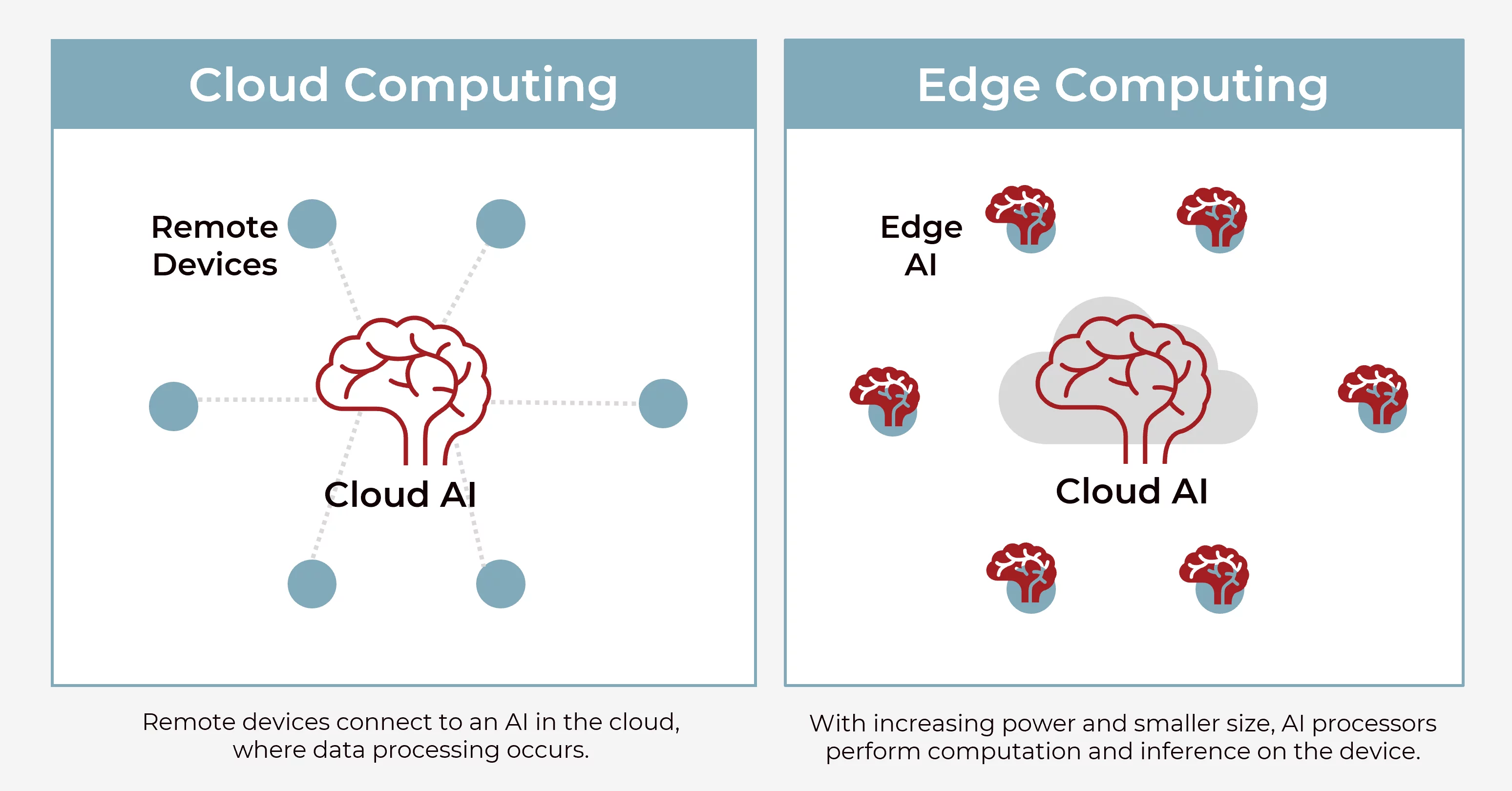
AI is no longer limited to cloud servers. Edge AI—where models run directly on devices like phones, laptops, cameras, and IoT sensors—is becoming the default for faster, safer, and cheaper intelligence. This shift is changing how apps are built, how data is protected, and how businesses scale globally.
This guide explains what Edge AI is, why it matters in 2026, and how creators and businesses can benefit—using simple global English and real-world examples.
What Is Edge AI? (Simple Explanation)
Edge AI means running AI models locally on a device instead of sending data to the cloud for processing.
Example:
- Face unlock on your phone
- Real-time language translation without internet
- Smart cameras detecting motion instantly
All of this happens on-device, not on remote servers.
Why Edge AI Is Exploding in 2026
1. Privacy-First AI
User data stays on the device, helping companies meet stricter privacy laws in the US and Europe.
2. Faster Performance (Low Latency)
No internet round-trip = instant responses. Critical for healthcare, vehicles, and smart factories.
3. Lower Cloud Costs
Businesses save money by reducing server usage and data transfer.
4. Works Offline
Edge AI apps function even with poor or no connectivity.
Edge AI vs Cloud AI (2026 Comparison)
| Feature | Edge AI | Cloud AI |
|---|---|---|
| Processing Location | On device | Remote servers |
| Speed | Instant | Slower (depends on internet) |
| Privacy | High | Medium |
| Internet Needed | No | Yes |
| Cost at Scale | Lower | Higher |
| Best Use Cases | Mobile, IoT, wearables | Large model training |
Real-World Use Cases in 2026
Smartphones
- On-device photo editing
- Voice assistants without sending audio online
Healthcare
- Wearables detecting heart issues in real time
- Patient data stays private
Smart Homes & IoT
- Cameras recognize faces locally
- Sensors react instantly to changes
Automotive
- Driver assistance systems
- Real-time hazard detection without cloud delay
Popular Edge AI Tools & Platforms (2026)
- On-device AI frameworks from major chipmakers
- Lightweight AI models optimized for mobile and IoT
- Hybrid systems combining Edge + Cloud intelligence
(We recommend testing tools that integrate with platforms like OpenAI APIs for hybrid workflows.)
Common Mistakes to Avoid
- ❌ Claiming Edge AI replaces all cloud AI
- ❌ Ignoring hardware limitations
- ❌ Overhyping without real examples
Human insight: The future is hybrid, not one-size-fits-all.
Final Thoughts
In 2026, Edge AI is no longer optional—it’s a competitive advantage. Faster apps, better privacy, and lower costs make on-device intelligence a smart choice for global products targeting the US and European markets.
If you create problem-solving content, explain concepts simply, and avoid fake claims, Edge AI topics can bring high-intent traffic and long-term rankings.