A practical, science-guided routine to extend healthspan—what to do daily, weekly, and why it matters.
TL;DR: The 10-minute version
- Move most days: aim for 7,000–10,000 steps, 2–3 cardio sessions with some intensity, and 2 strength sessions per week.
- Eat mostly plants and protein: 25–35 g fiber/day, protein ~1.0–1.2 g/kg (higher if older or training), minimize ultra-processed foods.
- Sleep 7–9 hours, regular schedule, morning light, limit late caffeine/alcohol.
- Manage stress and connect: a brief daily practice (breathwork, meditation) and purposeful social time.
- Keep numbers in range: BP near 120/80, LDL/ApoB low, A1c <5.7% if possible; keep waist-to-height ratio under 0.5.
- Don’t smoke/vape; moderate or skip alcohol.
- Preventive care: vaccines, screenings, oral health, and a primary care touchpoint.
- Environment: move and work in cleaner air, get safe sunlight, sit less, practice balance.
Why these practices matter
Longevity is two things: adding years and adding quality to those years (healthspan). The strongest levers shift risk for cardiovascular disease, metabolic disease, cancers, neurodegeneration, and injury. Below are daily and weekly actions with consistent evidence from large cohorts, randomized trials, and meta-analyses.
1) Move: cardio, steps, strength, mobility
Daily steps and sitting less
- Target 7,000–10,000 steps/day. Reaching ~7,000 is associated with markedly lower mortality risk versus <7,000, with benefits continuing up to ~10–12k (age-dependent).
- Break up sitting every 30–60 minutes with 1–3 minutes of light movement; prolonged uninterrupted sitting is linked to higher cardiometabolic and mortality risk.
Cardiorespiratory fitness (CRF)
- CRF (VO2 max) is a powerful predictor of mortality; even moving from low to average fitness yields large risk reductions.
- Weekly: 150–300 minutes moderate or 75–150 minutes vigorous activity, or a mix. Include one session with intervals (e.g., 4–6 × 1–3 minutes hard with easy recoveries).
Strength, muscle, and balance
- 2 sessions/week of resistance training (30–60 minutes total) are associated with ~10–20% lower mortality; combined with aerobic training is better than either alone.
- Prioritize compound lifts (squat/hinge/push/pull), progressive overload, and train to near-fatigue safely.
- Add mobility for hips/ankles/shoulders and balance work (single-leg stands, heel-to-toe walk, or tai chi) to reduce fall risk.
2) Eat for metabolic and vascular health
Principles
- Plant-forward patterns (e.g., Mediterranean/DASH) are linked to lower all-cause and cardiovascular mortality.
- Fiber: 25–35 g/day from legumes, whole grains, vegetables, nuts, fruit; higher fiber is associated with lower mortality and cardiometabolic risk.
- Protein: ~1.0–1.2 g/kg/day, especially for older adults to preserve muscle; distribute across meals (e.g., 25–40 g/meal).
- Fats: emphasize unsaturated fats (olive oil, nuts, fatty fish); limit trans fats and excess refined seed-oil–fried/ultra-processed foods.
- Carbs: choose minimally processed sources; match carbohydrate load to activity and glucose tolerance.
- Ultra-processed foods: higher intake correlates with higher mortality and cardiometabolic risk—minimize where practical.
- Alcohol: best limited or avoided; health benefits are unproven and confounded; risk rises with dose.
Meal rhythm
- Anchor meals to activity: a protein- and fiber-forward first meal; post-exercise carbs if training.
- Aim for a 10–12 hour daytime eating window if it helps adherence and sleep; evidence for time-restricted eating on longevity is mixed when calories/protein are matched.
3) Sleep: consistent, sufficient, protected
- Adults generally do best with 7–9 hours/night; both short and very long sleep are linked with higher risk.
- Keep consistent bed/wake times; get morning outdoor light; avoid caffeine after early afternoon; limit late alcohol and screens.
- If snoring, witnessed apneas, or excessive daytime sleepiness occur, screen for sleep apnea—treatment improves cardiometabolic outcomes.
4) Stress, mood, and connection
- Brief daily practice: 5–10 minutes of breathwork, mindfulness, or prayer reduces stress and improves blood pressure and sleep in trials.
- Social connection and purpose (“ikigai”) are associated with lower mortality; schedule regular time with people who matter and engage in meaningful roles.
- Seek treatment for depression, anxiety, or substance use—effective therapies improve quality of life and adherence to healthy behaviors.
5) Environment: air, light, heat/cold, sun
- Air quality: lower PM2.5 exposure is linked to longer life; use a HEPA purifier where you sleep/work and ventilate when cooking; check local AQI and adjust outdoor exercise as needed.
- Sunlight: brief regular exposure supports circadian rhythm and vitamin D; avoid burns, use shade/clothing/sunscreen as needed.
- Heat: sauna use (3–7×/week in Finnish cohorts) is associated with reduced CVD and all-cause mortality; ensure hydration and medical clearance if you have cardiovascular conditions.
- Cold: promising for glucose and brown fat activation, but longevity evidence in humans is limited; use for well-being/recovery if you enjoy it, with caution.
6) Medical basics that move the needle
Know and manage your numbers
- Blood pressure: aiming near 120/80 (if tolerated) reduces events; discuss targets with your clinician.
- Lipids: lower LDL-C/ApoB reduces atherosclerotic risk across life; lifestyle first, medications when indicated.
- Glucose: fasting glucose <100 mg/dL, A1c <5.7% if possible; prioritize weight, activity, sleep, and diet; treat prediabetes proactively.
- Anthropometrics: waist-to-height ratio <0.5 is a practical goal; track waist alongside weight.
Prevention
- Vaccines: stay current (influenza, COVID-19, Tdap, shingles, pneumococcal as age/risks indicate).
- Screenings: colon (start ~45), breast, cervical, skin as appropriate; AAA ultrasound for male ever-smokers around 65; osteoporosis screening for postmenopausal women and older men at risk.
- Oral health: brush, floss, and see a dentist; periodontal disease is linked with higher cardiometabolic risk.
- Avoid tobacco and nicotine; quitting rapidly reduces cardiovascular risk.
7) Supplements: when they may help
- Vitamin D: supplement if deficient or low sun exposure; large trials show limited benefit in replete adults.
- Omega-3s: eat fish; generic fish oil has modest effects—high-dose EPA is prescription therapy for specific populations.
- Creatine monohydrate: 3–5 g/day can aid strength and muscle in older adults, generally safe with normal kidney function.
- Magnesium: may help sleep/cramps if intake is low; choose glycinate or citrate.
- Multivitamins: routine use shows no clear mortality/CVD benefit in well-nourished adults.
Discuss supplements and interactions with your clinician, especially if pregnant, managing chronic conditions, or on medications.
8) Build the habit system
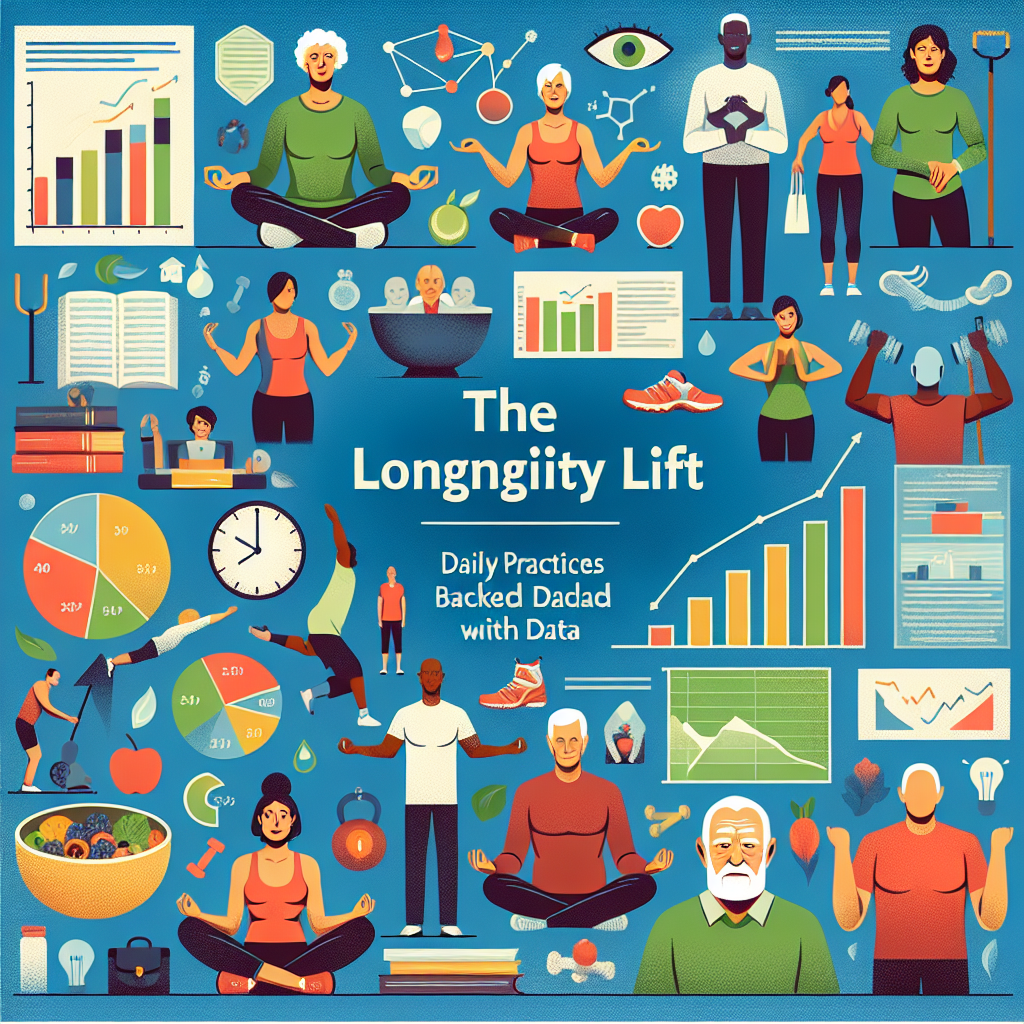
The daily “Longevity Lift”
- Morning: 5–10 min light outside + 5 min breathwork; protein-forward breakfast.
- Daytime: accumulate 7–10k steps; stand and move briefly each hour.
- Training: 20–30 min cardio (easy or intervals) or 20–30 min strength; alternate days.
- Evening: eat 2–3 hours before bed; dim lights/screens; consistent bedtime.
Weekly anchors
- 2× full-body strength, 2–3× cardio (1 interval session).
- Grocery plan: vegetables, legumes, whole grains, lean protein, nuts, olive oil.
- 1–2 social commitments; 1 longer outdoor session.
- Prep: lay out workout gear; calendar-block sessions; refill water bottle.
Track what matters (lightweight)
- Weekly: steps average; minutes of cardio/strength; alcohol units; weight and waist.
- Quarterly: BP, resting HR, simple fitness test (e.g., 1-mile time, grip strength, sit-to-stand).
- Yearly: lipids (including ApoB if available), A1c/fasting glucose, vaccines/screens as due.
Safety and personalization
- Progress gradually if you’re new to exercise or returning from injury; consider a medical check if you have symptoms or conditions.
- Adapt protein, sodium, and supplements to kidney, liver, and cardiovascular status.
- Focus on consistency over perfection; small daily wins compound.
Selected references
- Paluch AE et al. Steps per Day and Mortality in Black and White Adults. JAMA Netw Open. 2021;4(9):e2124516.
- Hanson S et al. Dose–response association of daily step count and all-cause mortality: systematic review and meta-analysis. JAMA Intern Med. 2022.
- Diaz KM et al. Patterns of Sedentary Behavior and Mortality. Ann Intern Med. 2017;167:465–475.
- Kokkinos P et al. Cardiorespiratory Fitness and Mortality Risk. Prog Cardiovasc Dis. 2019;62(2):10–14.
- Momma H et al. Muscle-strengthening activities and risk of mortality. Br J Sports Med. 2022;56:755–761.
- Ekelund U et al. Physical activity, sedentary time, and mortality. BMJ. 2019;366:l4570.
- Reynolds A et al. Carbohydrate quality and human health: systematic review and meta-analysis. Lancet. 2019;393:434–445.
- Estruch R et al. PREDIMED trial: Mediterranean diet and cardiovascular events. N Engl J Med. 2018 (reanalysis).
- Hall KD et al. Ultra-processed diet causes excess calorie intake and weight gain: RCT. Cell Metab. 2019;30:67–77.
- Srour B et al. Ultra-processed food intake and mortality. BMJ. 2019;365:l1949.
- American Heart Association. Life’s Essential 8: Updating CV health metrics to include sleep. Circulation. 2022.
- Holt-Lunstad J et al. Social Relationships and Mortality Risk: Meta-analysis. PLoS Med. 2010;7(7):e1000316.
- Laukkanen T et al. Sauna bathing and reduced sudden cardiac death, CVD, and all-cause mortality. JAMA Intern Med. 2015;175(4):542–548.
- SPRINT Research Group. Intensive vs standard blood-pressure control. N Engl J Med. 2015;373:2103–2116.
- Ference BA et al. Low-density lipoproteins cause atherosclerotic disease: genetic, epidemiologic, and clinical evidence. Eur Heart J. 2017;38:2459–2472.
- VITAL Research Group. Vitamin D and Omega-3 Trial: primary prevention results. N Engl J Med. 2018;380:23–32.
- Bernstein AM et al. Fish intake and CVD: pooled analysis. Circulation. 2010;122:684–692.
- Viktil KK et al. Creatine supplementation in older adults: systematic reviews show strength/function benefits. Nutrients. 2019.
- Gakidou E et al. Global Burden of Disease Alcohol Collaborators. No safe level of alcohol? Lancet. 2018;392:1015–1035.
- Sherrington C et al. Exercise to prevent falls in older people: systematic review. Br J Sports Med. 2019;53:905–911.
- Petersen SE et al. UK Biobank physical activity and mortality (accelerometer). Nat Med. 2020.
- Tonetti T et al. Sleep duration and mortality: meta-analyses. Sleep Med Rev. 2017.
- Sanz M et al. Periodontitis and risk of CVD and diabetes: consensus report. J Clin Periodontol. 2020.
Note: References illustrate representative evidence through 2023; consult guidelines and clinicians for personalized recommendations.