
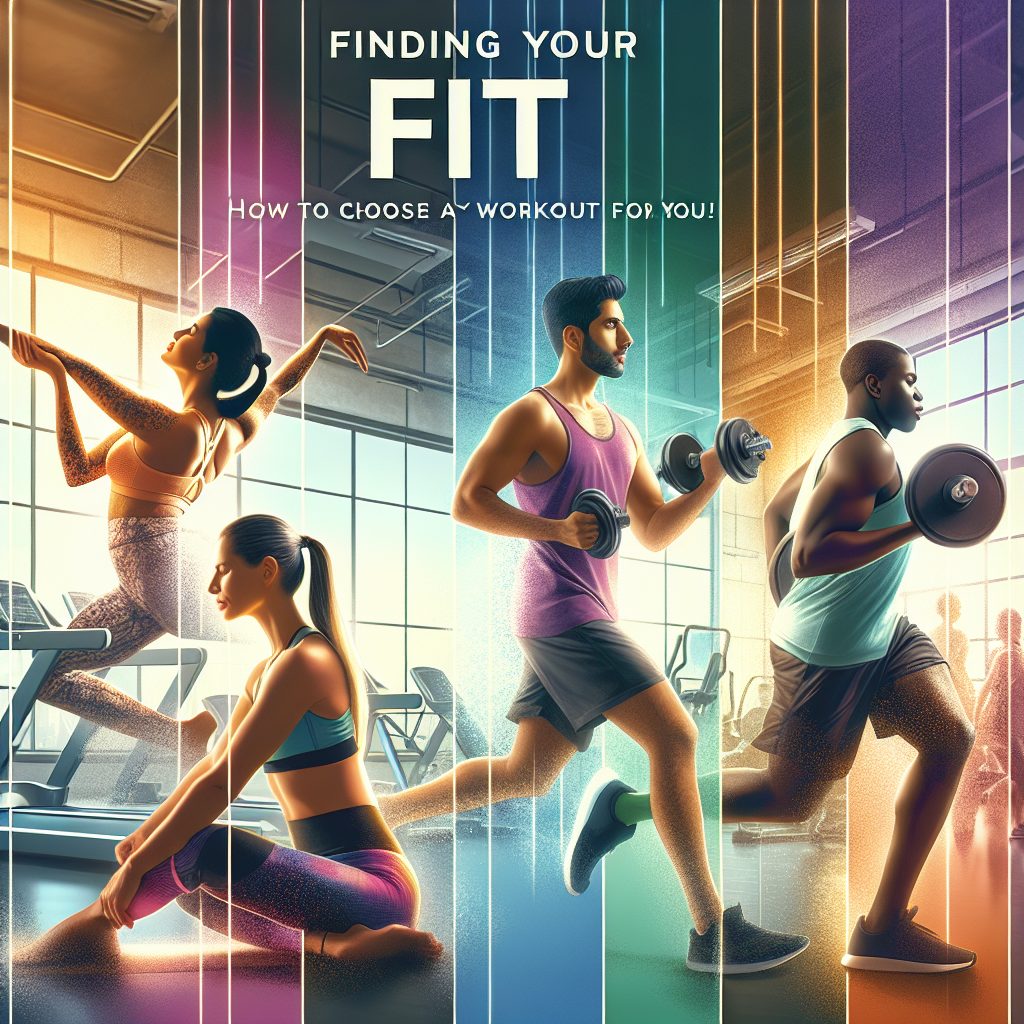
Your best workout is the one you’ll do consistently—and that moves you toward your goals without burning you out. Use this guide to find a training style that fits your body, your schedule, and your life.
Why the “right” workout matters
- Better adherence: You’ll stick with something you enjoy.
- Faster progress: Training that matches your goals gives clearer results.
- Fewer injuries: Appropriate load and style reduce risk.
- More energy: The right dose boosts mood and recovery instead of draining you.
Step 1: Know your goal and constraints
Pick a primary goal for the next 8–12 weeks:
- Build strength or muscle
- Improve cardio/endurance
- Lose fat or improve body composition
- Increase mobility/flexibility
- Reduce stress and feel better
- Perform better at a sport
List your constraints:
- Time per session and days per week
- Equipment and space available
- Budget (gym, classes, home gear)
- Injury history or medical considerations
Step 2: Preference check
Your preferences are not “extras”—they’re performance drivers.
- Environment: Home, gym, outdoors
- Social: Solo, partner, group class
- Structure: Follow a plan or freestyle
- Vibe: Quiet focus, music-driven, competitive
- Movement feel: Steady rhythm, heavy lifts, athletic skills, mind-body
Step 3: Your starting point
- If you’re new, start light and progress gradually.
- Manage past injuries with modifications and simpler movements.
- If you have medical conditions, recent surgery, or you’re pregnant/postpartum, get professional clearance and guidance.
Workout menu by primary goal
Strength and muscle
Good fits: Full-body lifting, bodyweight training, machines, kettlebells.
- Frequency: 2–4 sessions/week
- Structure: 4–8 exercises, 2–4 sets, 5–12 reps
- Progression: Add small amounts of weight or reps weekly
Sample session (45–60 min):
- Warm-up 5–8 min: light cardio + mobility
- Squat or leg press: 3×6–10
- Row (cable/dumbbell): 3×8–12
- Push-up or bench press: 3×6–10
- Hinge (RDL or hip hinge): 3×8–12
- Core (plank or dead bug): 3×30–45s
Cardio and endurance
Good fits: Walking, running, cycling, rowing, swimming.
- Frequency: 3–5 sessions/week
- Mix: 1–3 steady sessions + 1–2 interval sessions
Sample week (30–45 min each):
- Mon: Steady Zone 2 (easy conversational pace)
- Wed: Intervals 6×2 min hard, 2 min easy
- Sat: Longer steady session
Fat loss/body composition
Best combo: Strength training + moderate cardio + daily movement.
- Strength: 2–3 days
- Cardio: 2–3 days
- Steps: Aim for a sustainable daily average
Mobility and flexibility
Good fits: Yoga, mobility flows, Pilates fundamentals.
- Frequency: 2–5 short sessions/week
- Focus: Hips, thoracic spine, shoulders, ankles
Stress relief and mental health
Good fits: Walking, gentle cycling, yoga, meditative strength, nature hikes.
- Keep intensity low-to-moderate most days
- Use breath and longer cool-downs
Sport performance
Blend skill practice with strength, power, and conditioning specific to your sport.
Quick picks: If you like X, try Y
- If you love music and group energy → Spin, dance fitness, circuit classes
- If you like measurable progress → Barbell strength, rowing, running
- If you prefer calm, mindful movement → Yoga, Pilates, mobility sessions
- If you want variety and skill → Kettlebells, CrossFit-style (scaled), martial arts
- If you want outdoors → Hiking, running, cycling, rucking
- If joints are sensitive → Swimming, elliptical, cycling, machine-based strength
Time-based templates
3 days × 30 minutes
- Day 1: Full-body strength (push, pull, squat, hinge, core)
- Day 2: Intervals (8–12 × 30s hard / 60s easy)
- Day 3: Mobility + brisk walk
4 days × 45 minutes
- Mon: Upper strength
- Tue: Lower strength
- Thu: Steady cardio (Zone 2)
- Sat: Mixed intervals + mobility
6 days × 20 minutes (micro-sessions)
- Mon/Wed/Fri: Short full-body strength circuits
- Tue/Thu/Sat: Walk or cycle easy + 5 min mobility
Budget and access
- No equipment: Walking, running, stairs, bodyweight circuits, yoga
- Minimal gear: Resistance bands, adjustable dumbbells, kettlebell, jump rope
- Gym alternatives: Community centers, outdoor parks, school tracks
- Coaching: Apps, online programs, group classes, or a few PT sessions to learn form
Safety essentials
- Warm-up 5–10 minutes; cool-down 5 minutes
- Use RPE (Rate of Perceived Exertion) 1–10 to manage intensity
- Progress gradually: 5–10% increases per week in volume or intensity
- Technique first: Quality reps beat heavier weights
- Rest days: At least 1–2 per week
- Stop and assess if you feel sharp pain, dizziness, chest pain, or unusual shortness of breath
Note: This is general guidance and not medical advice. Consult a professional for personalized recommendations.
Tracking what matters
- Strength: Sets, reps, loads, and form quality
- Cardio: Duration, distance, pace, heart rate or RPE
- Mobility: Range of motion and positions that feel easier
- Well-being: Sleep, energy, mood, stress
- Enjoyment: Rate each workout 1–5; keep what scores 4–5 often
Build the habit
- Start small: Choose a plan you’re 90% sure you can complete
- Schedule it: Same days and times each week
- Prepare: Lay out gear the night before
- Pair it: Attach to an existing routine (after coffee, during lunch)
- Plan B: Have a 10–15 minute fallback workout
- Accountability: Friend, coach, class, or app reminders
Adjusting over time
- If you plateau: Slightly increase volume, change rep ranges, or try a new modality
- Deload every 4–8 weeks: Reduce volume/intensity for 1 week
- Seasonal and travel shifts: Shorter sessions, hotel-gym circuits, outdoor alternatives
Common myths
- Myth: More sweat = better workout. Truth: Sweat reflects temperature and genetics, not effectiveness.
- Myth: Spot reduction works. Truth: You lose fat systemically; train whole body and manage nutrition.
- Myth: “No pain, no gain.” Truth: Discomfort can be normal; sharp pain is a red flag.
- Myth: Cardio kills gains. Truth: Smartly dosed cardio can improve recovery and health.
A 4-week “find your fit” experiment
Try different styles, track enjoyment and results, then commit to your favorite for the next 8–12 weeks.
- Week 1: Walks + intro full-body strength + gentle yoga
- Week 2: Intervals (bike/row/run) + full-body strength
- Week 3: Group class (spin, dance, bootcamp) + mobility flow
- Week 4: Outdoor session (hike/ruck) + kettlebell or bodyweight circuit
Modifications for common needs
- Joint pain: Favor cycling, swimming, elliptical; use machines or supported lifts; avoid deep end-range under load
- Beginners: Short sessions, simple movements, focus on form and consistency
- Older adults: Prioritize strength, balance, and power with safe progressions
- Pregnant/postpartum: Prioritize breath, core/pelvic floor, and low-to-moderate intensity under medical guidance
Final checklist
Next step: Pick your start date, put the sessions on your calendar, and begin. Adjust as you learn. The best workout is the one you’ll stick with—and the one that keeps you coming back.
